10 Tips for Buying Building Construction Pipe?

Time:2026-09-13 Author:Liam
0%

Buying Building Construction Pipe is not simply a matter of comparing prices and diameters. A pipe hidden inside a wall may carry water, gas, drainage, or pressurized fluids. Its failure can damage finishes, delay occupancy, and create expensive safety concerns.

Mohinder L. Nayyar, author of the respected Piping Handbook, offers a useful principle: “Piping reliability begins with understanding the service conditions.” That idea should guide every purchase. Before requesting quotations, identify the fluid, operating pressure, temperature, installation location, expected service life, and connection method. Check whether the pipe suits indoor shafts, underground trenches, exposed roofs, or corrosive environments. These details matter.

Material selection deserves careful attention. Carbon steel, stainless steel, ductile iron, copper, and plastic systems perform differently. Wall thickness, outside diameter, coating, weld quality, and corrosion resistance should match the project specification. Ask suppliers for mill certificates, test reports, dimensional records, and applicable compliance documents. A polished certificate alone proves little if the batch number does not match the delivered pipe.

Inspect the actual products. Look for dents, oval ends, damaged threads, peeling coatings, and blocked interiors. Store pipes on clean supports, away from standing water and construction debris. Small mistakes become large problems.

The ten tips ahead will examine supplier evaluation, technical specifications, cost, inspection, transportation, and installation coordination. Yet a checklist cannot replace professional judgment. Even experienced buyers sometimes prioritize a low quotation too quickly. That is worth reconsidering. The cheapest Building Construction Pipe may become the most expensive component after replacement, leakage, or premature corrosion.
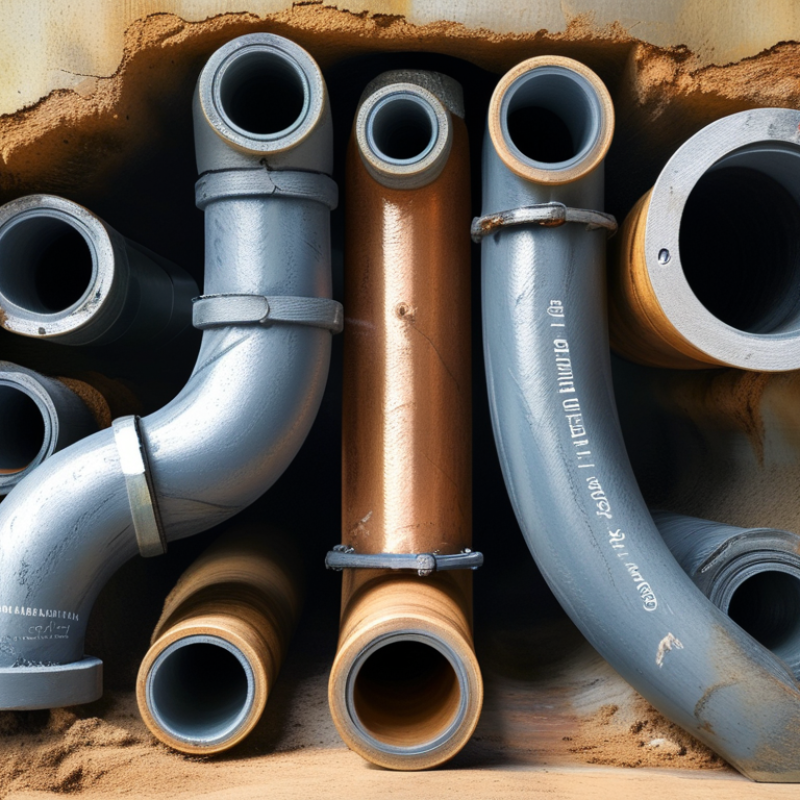
10 Tips for Buying Building Construction Pipe?

Define the Project’s Pipe Requirements

Before buying building construction pipe, define the project’s actual service conditions. Identify whether the pipe will carry water, drainage, air, or another approved medium. Record the required flow rate, pressure, temperature, and installation location. An indoor sprinkler line has different needs from an exposed drainage stack. Keep these details in writing.

Tip: Measure twice, and verify the drawings. Confirm the nominal diameter, wall thickness, total length, bend locations, and connection method. Check local building codes and the engineer’s specifications before ordering. Pipe material should match the fluid, soil conditions, sunlight exposure, and expected service life. For buried sections, note trench depth, bedding, groundwater, and possible vehicle loads. A small mistake here becomes expensive later.

Do not estimate quantities from floor area alone. Add measured allowances for cutting, fittings, supports, expansion, and site waste, while avoiding excessive stock. Include inspection access and future maintenance space. I have seen projects fail because the pipe fit the drawing but not the crowded ceiling. That detail is easy to miss. Recheck clearances around beams, valves, insulation, and electrical services. When requirements conflict, pause the purchase and request written clarification from a qualified construction professional. 北京赛车有

10 Tips for Buying Building Construction Pipe: Define the Project’s Pipe Requirements

Tip 1: Identify the service, operating pressure, and temperature before selecting pipe material, diameter, and wall thickness. The chart shows common planning pressure ranges for building services.

Values are representative planning ranges in kPa. Final pipe requirements must be confirmed against local codes, system calculations, temperature, surge conditions, and the engineer’s project specification.

Choose the Right Pipe Material and Grade

10 Tips for Buying Building Construction Pipe: Choose the Right Pipe Material and Grade

Pipe material should match the fluid, pressure, temperature, and surrounding soil. Carbon steel suits many structural and pressure applications. Stainless steel performs better where chlorides or moisture create corrosion risks. Plastic pipe can reduce weight, but heat limits require careful checking. Grade matters. ASTM A53 commonly supports general mechanical and pressure service, while ASTM A106 is designed for higher-temperature conditions. Confirm the standard, manufacturing method, wall thickness, and inspection documents before ordering.

Global supply does not equal suitability. The World Steel Association reported 1.892 billion tonnes of crude steel production in 2023. That scale supports broad availability, but it cannot replace engineering review. The USGS Mineral Commodity Summaries 2024 recorded approximately 22 million tonnes of global copper mine production in 2023. Copper remains useful for selected water systems, yet cost, water chemistry, and joining methods still matter. Do not guess.

On site, check the stamped grade against the mill certificate. Then compare it with the project specification and design code. A pipe buried beside salty backfill may need external protection, even with a corrosion-resistant alloy. I have seen buyers focus on diameter and overlook temperature cycling. That mistake can create leaks near welds and supports. I would also question unusually cheap pipe; inconsistent wall thickness may remain hidden until installation. Recheck the weakest operating condition, not the average one.

Check Dimensions, Standards, and Load Capacity

Buying building construction pipe requires more than checking a shiny surface. The World Steel Association reported about 1.89 billion tonnes of crude steel production in 2023, showing the scale of this supply chain.

Tip 1: Confirm outside diameter, inside diameter, wall thickness, and length.
Tip 2: Compare these dimensions with approved drawings.
Tip 3: Check tolerances, because a small mismatch can complicate welding or fitting.

Standards provide a safer comparison. Tip 4: Match the pipe specification to its application, such as structural, pressure, or scaffolding use.
Tip 5: Verify the stated standard and edition, including relevant ASTM, EN, or ISO requirements.
Tip 6: Request mill certificates, chemical results, tensile strength, and yield strength.
Tip 7: Inspect markings and traceability on every bundle.

A certificate alone is not enough. I have seen paperwork look complete while surface damage remained unrecorded.

Load capacity needs engineering judgment. Tip 8: Do not estimate capacity from diameter alone. Wall thickness, steel grade, unsupported length, buckling, connections, corrosion, and eccentric loads all matter.
Tip 9: Ask a qualified engineer to verify calculations under the applicable building code.
Tip 10: Check whether the supplier’s capacity table includes safety factors and real boundary conditions.

The American Institute of Steel Construction’s design guidance treats compression members as buckling-sensitive, not simply weight-bearing tubes.
This detail is easy to overlook. Recheck it.

A practical purchase file should include drawings, test reports, inspection photos, and delivery records.

Compare Suppliers, Prices, and Product Quality

Buying building construction pipe requires more than chasing the lowest quote. Ask each supplier for exact specifications, including diameter, wall thickness, length, material grade, and surface treatment. Compare at least three suppliers using the same written requirements. Otherwise, a cheaper offer may simply contain less steel. Request recent mill certificates and independent test results. Check whether the documents match the actual batch, not just a standard template. Inspect sample pipes for dents, uneven ends, rust marks, and rough welds.

Review the full price carefully. Include cutting, coating, packaging, loading, transport, taxes, and delivery insurance where applicable. Ask about minimum order quantities and storage fees. A low unit price can become expensive after these additions. Confirm production time and stock availability in writing.

On one project, delayed pipe disrupted concrete work for several days. The initial savings did not feel worthwhile. It was a useful lesson.

Evaluate supplier reliability through factory photos, inspection records, customer references, and clear technical replies. Ask how they control wall-thickness tolerance and bundle identification. A small measurement error can create installation problems. Compare payment terms, replacement procedures, and communication speed. Visit the warehouse when possible. Look at how pipes are stacked and protected from standing water. Do not accept vague promises. I still think price matters, but quality checks deserve more attention than I once gave them. Allow a sample inspection before approving the complete shipment.

Inspect Delivery, Documentation, and Long-Term Support

Buying construction pipe is not complete when the truck arrives. At the gate, compare bundle tags with the purchase order, heat numbers, diameter, wall thickness, coating, and quantity. Photograph crushed ends, wet packaging, gouges, and missing caps before unloading. A simple tape measure and coating-thickness gauge can expose problems early. Do not trust a clean-looking bundle. The U.S. EPA’s 2023 Drinking Water Infrastructure Needs Survey estimates that $625 billion will be needed over 20 years. That scale makes traceability more than office work.

Request mill certificates, test reports, coating records, packing lists, and inspection release documents. Check that heat numbers on certificates match markings on every bundle. Keep delivery photos, nonconformance reports, and approved substitutions in one controlled file. Long-term support should include response times, spare sections, installation guidance, and warranty limits. Ask who will answer after the first winter. ASCE’s 2021 Report Card gave U.S. drinking water infrastructure a C-minus and wastewater a D-plus. Those grades reflect aging assets, not merely poor paperwork. Still, I would not treat every certificate as proof of field performance. Storage damage, poor joint preparation, or rushed installation can defeat compliant pipe. Supplier follow-up and honest lessons from failed deliveries remain valuable.

10 Tips for Buying Building Construction Pipe? – Inspect Delivery, Documentation, and Long-Term Support

No. Buying Dimension What to Check Practical Acceptance Guidance Recommended Evidence
1 Confirm the Application Define whether the pipe will be used for structural framing, water supply, drainage, fire protection, compressed air, or another service. Check that the selected material, wall thickness, pressure rating, corrosion resistance, and joining method are suitable for the intended service. Approved drawings, project specifications, and service-condition summary.
2 Verify Size and Wall Thickness Compare nominal diameter, outside diameter, length, wall thickness, and dimensional tolerances with the purchase order. Use calibrated measuring tools for sample checks. Do not rely only on nominal size because actual dimensions can vary within the applicable standard tolerance. Purchase order, packing list, dimensional inspection report, and calibration records.
3 Check Material Grade Confirm the pipe material and grade, such as carbon steel, stainless steel, ductile iron, copper, PVC, CPVC, or HDPE, according to the design. The material designation on the pipe, bundle tag, and certificate should match the specified grade and intended operating conditions. Material certificate, heat or batch number, product marking, and traceability list.
4 Review Applicable Standards Identify the required national, regional, or project standard for manufacture, dimensions, testing, and marking. Ensure the supplier states the exact standard and edition used. A general statement such as “standard quality” is not sufficient for technical approval. Standard reference, product data sheet, inspection and test plan, and compliance declaration.
5 Inspect Surface and End Condition Look for dents, cracks, laminations, deep scratches, excessive rust, coating damage, distorted ends, and damaged threads or grooves. Pipe ends should be protected and suitable for the specified connection. Reject or quarantine items with defects that could affect fit, strength, sealing, or corrosion protection. Receiving inspection checklist, photographs, nonconformance report, and repair approval where applicable.
6 Inspect Delivery and Quantity Compare delivered quantities, lengths, bundles, sizes, and identification marks with the packing list and purchase order. Count or measure materials before signing final acceptance. Record shortages, mixed sizes, inaccessible bundles, and transit damage on the delivery receipt. Signed delivery note, packing list, receiving report, and damage photographs.
7 Verify Test Documentation Review certificates for chemical composition, mechanical properties, hydrostatic or pressure testing, dimensional inspection, and coating tests when required. Certificates should identify the product, batch or heat number, test results, applicable standard, inspection date, and authorized approval. Test certificates, inspection release note, laboratory report, and certificate-to-product traceability matrix.
8 Assess Coating and Corrosion Protection Check coating type, surface preparation, coating thickness, holiday testing requirements, end protection, and storage conditions. Confirm that the coating system is compatible with the environment and installation method. Damaged coating should be repaired using an approved procedure before installation. Coating specification, thickness readings, repair procedure, and inspection records.
9 Evaluate Total Cost and Lead Time Consider pipe price, fittings, transportation, inspection, storage, cutting, joining, coating repair, waste, and possible replacement costs. Compare complete delivered cost rather than unit price alone. Confirm production time, shipping time, required delivery sequence, and tolerance for schedule changes. Commercial quotation, delivery schedule, logistics plan, and cost comparison sheet.
10 Confirm Long-Term Support Assess availability of technical assistance, replacement materials, spare fittings, installation guidance, warranty terms, and complaint response procedures. Obtain written contact details, response times, warranty scope, and document-retention commitments before placing the order. Warranty statement, technical support procedure, contact list, spare-parts plan, and after-sales agreement.
Inspection results should be evaluated against the approved project specification, purchase order, and applicable product standard.

FAQS

What dimensions should I confirm before ordering construction pipe?

Check outside diameter, inside diameter, wall thickness, and length. Compare every value with approved drawings. Small tolerance errors can disrupt welding or fitting. Measure samples when possible.

Why do pipe standards and editions matter?

The stated standard should match structural, pressure, or scaffolding use. Confirm the exact edition and required tests. A familiar standard may still be unsuitable. That deserves a second check.

Which documents should accompany each pipe shipment?

Request mill certificates, chemical results, tensile tests, yield strength, coating records, packing lists, and inspection releases. Match certificate heat numbers with bundle markings. Paperwork can look complete while damage remains hidden.

How can I inspect pipe at delivery?

Compare bundle tags with the purchase order before unloading. Check quantity, diameter, wall thickness, coating, and heat numbers. Photograph crushed ends, wet packaging, gouges, and missing caps. Use a tape measure and coating-thickness gauge. Do not rush.

Can diameter alone determine load capacity?

No. Capacity also depends on wall thickness, steel grade, unsupported length, buckling, connections, corrosion, and eccentric loads. Have a qualified engineer verify calculations under the applicable building code. A supplier table may omit real boundary conditions.

What should a capacity table include?

Ask whether it includes safety factors, end conditions, unsupported length, connection details, and load eccentricity. Compression members can buckle before reaching an obvious weight limit. This is easy to miss. Recheck the assumptions.

How should I organize construction pipe records?

Keep drawings, test reports, inspection photos, delivery records, nonconformance reports, and approved substitutions together. Record each bundle’s heat number and condition. A controlled file helps trace problems later. Mine would be clearer than some past files.

What long-term support should a supplier provide?

Confirm response times, spare sections, installation guidance, and warranty limits. Ask who handles questions after the first winter. Storage damage and rushed installation can defeat compliant pipe. Supplier follow-up matters. Maybe more than expected.

Conclusion

Buying the right Building Construction Pipe requires more than comparing prices. Start by defining the project’s requirements, including the intended application, pressure and temperature conditions, pipe size, connection method, and expected service life. Then choose a suitable material and grade based on factors such as strength, corrosion resistance, installation environment, and maintenance needs. Confirm that the dimensions, manufacturing standards, wall thickness, and load capacity match the project specifications and safety expectations.

Next, compare suppliers by evaluating product quality, pricing, production consistency, and communication. A reliable purchasing decision should also include a careful inspection upon delivery. Check quantities, surface condition, dimensions, markings, packaging, and supporting documentation, such as test reports and compliance records. Finally, consider long-term support, including replacement availability, technical assistance, warranty terms, and after-sales service. A systematic evaluation helps reduce installation problems, control costs, and ensure that the selected pipe performs reliably throughout the construction project.


Liam

Liam

Liam is a dedicated marketing professional with a profound expertise in the industry, where he excels at highlighting the unique advantages of our core products. With a keen understanding of market trends and consumer needs, Liam frequently updates our company’s professional blog, providing......