Buying Hot Rolled A36 Steel Angle in 2026 requires more than comparing prices per ton. Buyers must confirm chemistry, dimensions, surface condition, certification, and delivery reliability. A36 steel angle may look simple on a warehouse rack, yet small variations can affect fabrication, fit-up, and structural performance. Check the mill test report before approving the order. Do not rely only on a supplier’s product photograph.
According to Charles J. Carter, former president of the American Institute of Steel Construction, “Good steel decisions start with good information.” This principle matters during every purchase. Ask whether the angle meets ASTM A36 requirements, and verify the leg sizes, thickness, length, and straightness. For example, a 3 × 3 × 1/4-inch angle should match the stated measurements before cutting begins. Request heat numbers that connect the material to its test documentation. That detail can save time later.
Experience also shows that the lowest quotation is not always the lowest cost. Freight, cutting charges, minimum order quantities, rust protection, and rejected material can change the final figure. Compare delivered cost instead. Clarify whether the supplier offers mill-length stock or cut-to-length pieces. Ask how the material was stored. Light surface oxidation may be manageable, but deep pitting deserves careful review.
One imperfect part of many buying plans is the demand forecast. Steel prices and availability can shift quickly. A small reserve may protect a project, but excess stock ties up cash. Review the specification with an engineer when the angle carries significant loads. Reliable purchasing means checking assumptions, not merely placing an order.
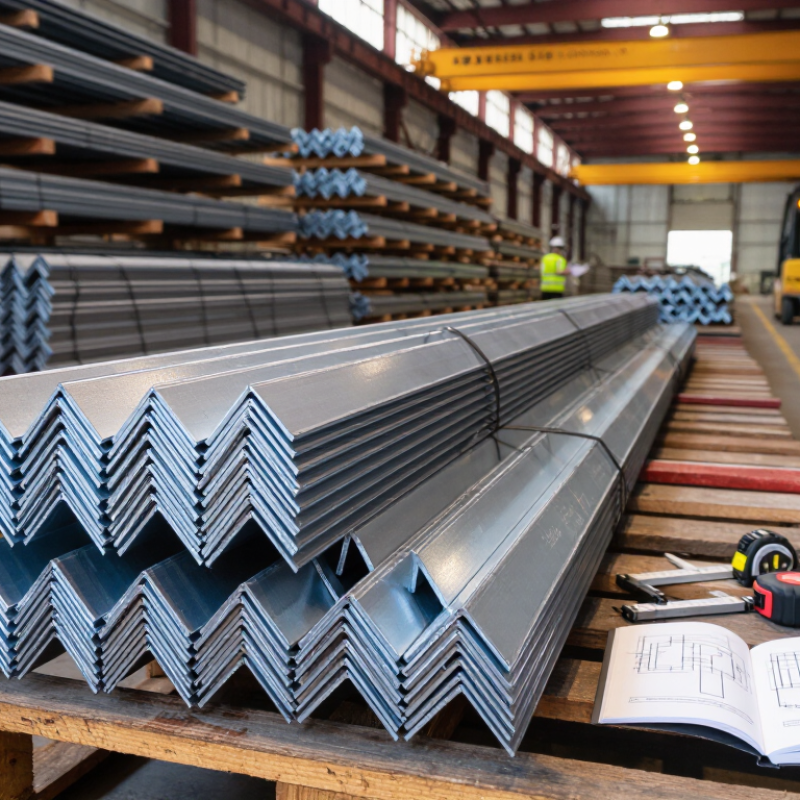
A36 steel angle is a hot rolled, L-shaped structural section used for frames, brackets, supports, and general fabrication. Its grade describes strength, not merely appearance. The commonly quoted minimum yield strength is 36 ksi, or 36,000 pounds per square inch. Tensile strength typically ranges from 58 to 80 ksi. Yield strength shows when permanent bending begins. Tensile strength measures the stress required to cause failure.
When buying in 2026, check the material test certificate before comparing prices. Confirm the ASTM A36 designation, angle legs, thickness, length, and heat number. A 3-inch by 3-inch angle with a 1/4-inch thickness feels very different from a 6-inch heavy section during handling and welding. Ask whether dimensions follow the required structural tolerances. Small size variations can affect fit-up, bolt alignment, and fabrication time.
Do not assume every angle reaches the same 36 ksi yield value at every thickness. Product standards and certificate details matter. That point is easy to overlook. I once focused too heavily on price and missed a tolerance requirement; the cutting plan had to change. Surface scale is normal on hot rolled steel, but deep gouges, edge splits, or excessive twist deserve inspection. Compare certified chemistry, mechanical results, delivery condition, and total cutting waste, not only the quoted price.
How to Buy Hot Rolled A36 Steel Angle in 2026?
Confirm the leg size before requesting a quotation. Equal angles may be listed as 2 x 2 inches, while unequal angles use two different leg dimensions. Check whether measurements are nominal or actual. Small differences can affect fit, welding, and connection alignment. Specify the required thickness clearly, such as 1/4 inch or 6 millimeters. Do not rely on a product photo.
Length requires equal attention. State each piece length, required quantity, and whether cutting is permitted. ASTM A6/A6M provides general dimensional tolerances, including length, straightness, and mass. However, the applicable tolerance depends on the ordered size and product requirements. Ask for the current standard edition and the supplier’s tolerance table. A vague “standard length” request creates avoidable problems.
Inspect the angle when it arrives. Use a calibrated tape, micrometer, and straightedge. Measure both legs and check thickness at several points, avoiding corner radius confusion. Review the mill test report for the A36 grade, heat number, and applicable specifications. Documents help, but they do not replace physical inspection. I have seen orders pass paperwork review and still need correction after cutting. Record any deviation before fabrication. That step is easy to skip. It should not be.
Confirm leg size, thickness, length, and ASTM A6 tolerances before ordering.
The chart compares calculated nominal mass for commonly specified equal-leg hot rolled angles. Values are based on nominal leg dimensions, nominal thickness, and a steel density of 7,850 kg/m³; actual supplied weight may vary. ASTM A36/A36M confirms the material grade, while ASTM A6/A6M dimensional tolerances must be checked against the applicable tolerance table for the ordered shape, thickness, width, and length.
Specify both legs, such as 4 × 4 in for an equal angle. Unequal angles require two different leg dimensions.
State nominal thickness and required cut or mill length. Confirm whether the length is supplied as a fixed cut length or a standard stock length.
Request the applicable ASTM A6/A6M tolerance requirements for dimensions, straightness, length, and permitted variation before accepting the order.
How to Buy Hot Rolled A36 Steel Angle in 2026?
Calculate Order Weight Using Steel Density of 7,850 kg/m³
When buying hot rolled A36 steel angle, calculate weight before requesting a quotation. Use the engineering density of 7,850 kg/m³. For an equal angle, estimate cross-sectional area with this formula: A = 2bt − t². Convert millimeters to meters before calculating. A 50 × 50 × 5 mm angle has an area of 0.000475 m². Its estimated mass is 3.73 kg per meter, or 22.37 kg for a six-meter length. Keep it practical. Check every unit.
ASTM A36/A36M identifies the material’s minimum yield strength near 250 MPa, while ASTM A6/A6M covers dimensional and mass tolerances. These tolerances can change the delivered weight slightly. The World Steel Association reported about 1.89 billion tonnes of crude steel production in 2023, showing the scale of the market, but global supply does not guarantee identical section accuracy. Ask for a mill test certificate, heat number, dimensions, length tolerance, and theoretical mass table. USGS mineral reporting also shows steel remains a major industrial material, but recycled content and production routes vary. My first estimate was too neat. Real bundles may include cutting loss, mill variation, and moisture on outdoor surfaces. Separate theoretical weight from invoice weight. Use a calibrated scale when the order is large. Small errors multiply quickly.
When buying hot rolled A36 steel angle, start with the mill certificate, not the quoted price. The certificate should identify the standard, section size, heat number, chemical results, and mechanical properties. Check carbon, manganese, phosphorus, sulfur, and copper values against the required specification. A certificate without clear test results deserves careful questions.
Traceability matters on real projects. The heat number should appear on the certificate and match the marking, tag, or bundle label. I have seen documents with correct dimensions but missing heat references. That gap can create costly uncertainty during inspection. Confirm yield strength, tensile strength, elongation, and test direction when the application demands it. Do not assume every certificate uses the same format.
For 2026 prices, compare equivalent terms. Ask whether the quote covers cutting, testing, packing, inland freight, and delivery. Compare prices per metric ton, then calculate the delivered cost for your actual angle sizes and quantity. Thicker sections, small orders, and urgent production often increase the price. Request a validity period because raw material and freight costs can change quickly. A low offer may exclude certificates or inspection fees. I would also allow a small contingency; my own early estimates have sometimes been too optimistic. Availability can matter more than a minor price difference.
Inspect the surface before accepting any hot rolled A36 steel angle. Standard black steel may show mill scale, light oxidation, and small rolling marks. These are not automatically defects. Deep pitting, sharp cracks, laminations, or heavy flaking require closer review. If the angle has galvanizing or paint, check coating thickness at several points. Coating can hide damage. It should not hide poor steel.
Measure the legs, thickness, length, and squareness with calibrated tools. Compare results with the purchase specification, not memory. Check straightness across the full length, especially near bundle ends. Confirm the A36 grade through the material test certificate and heat number. A document can look complete and still contain a wrong size. That mistake happens more often than buyers admit.
Tips: Photograph each bundle before unloading. Record heat numbers and measured dimensions. Request the mill test certificate, packing list, commercial invoice, delivery note, and inspection report before shipment. Match every document to the order quantity and bundle marks. Check whether the stated coating applies to all surfaces or only exposed faces. Leave room for questions. A rushed inspection is rarely a reliable inspection.
Use steel density of 7,850 kg/m³. For an equal angle, use A = 2bt − t². Convert millimeters into meters first. Units matter.
Its estimated cross-sectional area is 0.000475 m². The mass is about 3.73 kg per meter. A six-meter piece weighs approximately 22.37 kg.
Manufacturing tolerances can change the actual section weight. Cutting loss, surface moisture, and mill variation also matter. My first estimate was too neat.
Request the material test certificate, heat number, packing list, invoice, delivery note, and inspection report. Match each document with bundle marks and ordered quantities.
Light mill scale, minor oxidation, and small rolling marks may be acceptable. Deep pits, sharp cracks, laminations, and heavy flaking need careful review. Do not guess.
Measure both legs, thickness, length, straightness, and squareness. Use calibrated tools. Compare measurements with the written purchase specification, not memory.
Yes, paint or galvanizing can conceal surface damage. Check coating thickness at several points. Inspect exposed edges and corners closely.
Photograph every bundle before unloading. Record heat numbers, bundle marks, measured dimensions, and visible damage. Keep the photos with the delivery records.
Yes. Theoretical weight is an estimate based on dimensions and density. Invoice weight may reflect actual weighing, tolerances, or cutting differences. For large orders, use a calibrated scale.
Buying Hot Rolled A36 Steel Angle in 2026 starts with verifying the material grade and dimensions. A36 steel typically provides a minimum yield strength of 36 ksi and tensile strength of 58–80 ksi. Before ordering, confirm the angle’s leg sizes, thickness, required length, and applicable ASTM A6 dimensional tolerances. Calculate the estimated order weight using a steel density of approximately 7,850 kg/m³, while allowing for cutting and length variations.
A reliable purchase also requires a careful comparison of mill certificates, chemical composition, heat numbers, current pricing, and delivery terms. Inspect the material’s coating, surface condition, straightness, and dimensions upon arrival, and match the shipment with its inspection and delivery documents. Reviewing these details helps buyers control cost, confirm specification compliance, and reduce the risk of receiving unsuitable material.

Minjie Steel