Choosing reliable Chinese suppliers is essential when project safety, delivery schedules, and long-term performance depend on steel pipe quality. A strong supplier should provide more than competitive pricing. It should demonstrate stable production, transparent communication, and practical experience with international orders. For buyers comparing Pre-Galvanized Steel Pipe manufacturers, the real evaluation begins inside the factory, not on a polished website.
Product details deserve close attention. Ask about the steel grade, outside diameter, wall thickness, zinc coating, welding process, and applicable standards, such as ASTM A53 or EN 10255. Request recent mill certificates, inspection reports, coating-thickness records, and clear photographs of bundled pipes. A reliable supplier should explain how it controls surface defects, ovality, weld quality, and corrosion protection. Small details matter. For example, poor end protection can expose pipe edges during ocean transport.
Supplier verification also requires direct evidence. A factory video call, production-line tour, or independent inspection can reveal more than sales promises. Check whether the company communicates consistently after receiving technical questions. Delayed replies may become serious problems during production. No checklist is perfect. Even experienced buyers can focus too heavily on price and overlook packaging, tolerances, or replacement procedures. A thoughtful comparison should balance cost, quality, capacity, certifications, and after-sales support.
This guide explains how to identify top China Pre-Galvanized Steel Pipe suppliers through practical research and evidence-based questions. It also highlights warning signs, verification steps, and purchasing details that help reduce avoidable risks. Reliable sourcing takes patience. The cheapest quotation is rarely the complete answer.
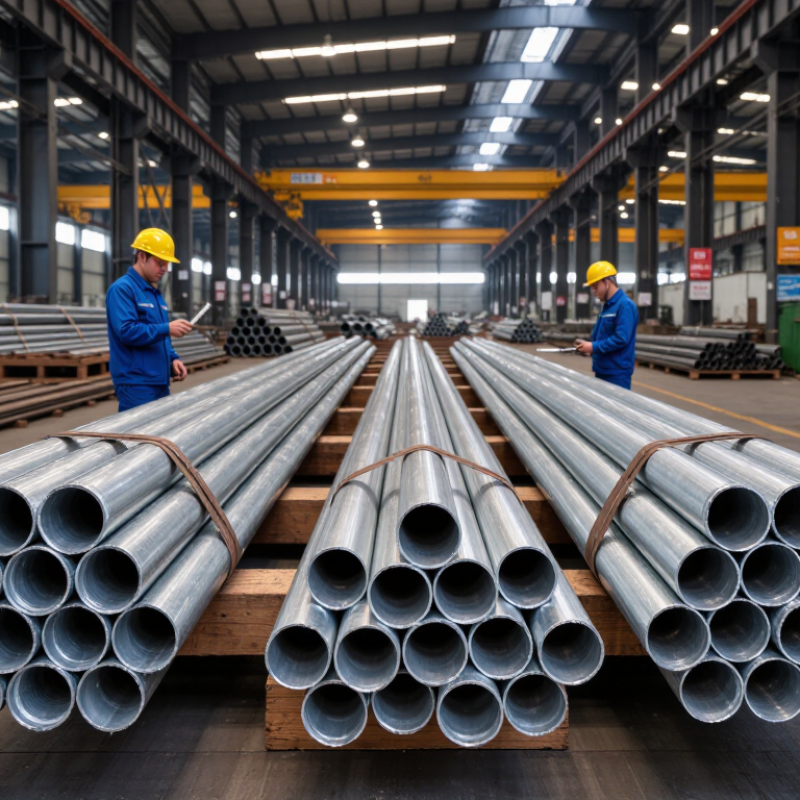
Pre-galvanized steel pipes are made from steel strip coated with zinc before rolling and welding. The zinc layer protects the steel from moisture and slows surface corrosion. These pipes suit light structural frames, conduits, greenhouse supports, and controlled indoor applications. Their surface looks clean and uniform. However, welded seams and cut ends still need attention. Zinc coverage is not a magic shield.
Supplier choice matters because coating quality can vary, even when pipe dimensions appear identical. A reliable supplier should provide mill certificates, coating measurements, chemical records, and tolerance data. Ask how the pipes are stored during humid sea freight. Check testing for weld strength, straightness, wall thickness, and end finishing. Photos are useful, but independent inspection offers stronger evidence. In practical purchasing reviews, small samples often reveal rough seams, uneven zinc, or inaccurate lengths. This step is easy to skip. It should not be.
Production capacity and communication deserve equal attention. An attractive quotation may hide thinner material, weak packing, or delayed delivery. Written specifications reduce those risks. Include outside diameter, wall thickness, zinc coating mass, length, bundle method, and acceptable defects. Pre-galvanized pipe is efficient, but not indestructible. Outdoor or highly corrosive projects may require post-galvanized treatment or additional protection. The cheaper option is sometimes the expensive mistake.
Before comparing China pre-galvanized steel pipe suppliers, define the pipe’s working conditions. State the outside diameter, wall thickness, nominal length, and dimensional tolerances. A greenhouse frame may need light tubing, while a handrail requires stronger walls and tighter fit. Specify the steel grade, welding requirement, and whether the pipe will be cut, drilled, or threaded after delivery.
Coating details deserve equal attention. Define the zinc coating mass or thickness, coating uniformity, and acceptable exposed areas near weld seams or cut ends. Pre-galvanizing protects the steel before forming, but later cutting can expose bare edges. That detail is easy to miss. Request the applicable production standard, inspection method, and test reports for each batch. Also clarify end treatment, surface appearance, ovality, straightness, and permitted weld-bead height.
Small specifications prevent large disputes. Include bundle weight, pipe count per bundle, protective packaging, marking, and traceability requirements. Ask whether mill certificates, dimensional reports, and coating test records accompany the shipment. A supplier may quote a lower price by changing length tolerance or zinc coverage. Compare identical specifications, not attractive numbers alone. I once overlooked packaging requirements on a trial order, and several pipes arrived with surface scratches. The lesson was practical: define handling conditions before requesting quotations. Leave no critical item as “standard” without written confirmation.
Evaluating a Chinese pre-galvanized steel pipe supplier requires more than comparing prices. Start by requesting mill certificates, coating test records, and recent production photos. A reliable supplier should identify steel grade, zinc coating mass, outside diameter, wall thickness, and tolerance clearly. Ask whether measurements follow recognized standards, and request the exact standard number. Vague answers deserve caution. During a factory review, inspect coil storage, slitting lines, welding stations, galvanizing equipment, and final inspection areas. Look for labeled coils, dry floors, calibrated gauges, and traceable batch codes. These small details often reveal process discipline better than polished presentations.
Production capacity must be verified with evidence, not impressive monthly figures. Request the number of forming lines, shift patterns, typical daily output, and current order load. Compare claimed capacity with delivery records from the past six months. A supplier producing several pipe sizes may need longer changeover time than expected. This detail can affect your schedule. Ask for a sample order and monitor response speed, dimensional consistency, weld appearance, zinc coverage, and packing quality. Independent testing can confirm tensile strength, coating adhesion, and corrosion resistance when the application is demanding. I would also check how the supplier handles rejected pipes and corrective actions. No factory performs perfectly. However, transparent records and practical explanations build confidence. One weakness remains: remote audits may hide temporary subcontracting. An on-site visit or third-party inspection can reduce that uncertainty before payment and shipment.
When choosing a China pre-galvanized steel pipe supplier, examine documents before comparing prices. The World Steel Association reported about 1.89 billion tonnes of crude steel production in 2023. This scale makes material traceability essential. Ask for a valid ISO 9001 certificate, with the supplier’s legal entity, factory address, and production scope clearly listed. ISO Survey 2023 recorded more than 1.2 million ISO 9001 certificates worldwide, but certification alone does not prove product quality. Verify the certificate through the issuing certification body or an accredited database.
Request a mill test certificate for every batch. It should show heat number, chemical composition, mechanical properties, pipe dimensions, and coating information. For galvanized products, confirm compliance with the agreed standard, such as ASTM A53, EN 10255, or GB/T 3091. The certificate should also identify the applicable zinc coating requirement. An EN 10204 3.1 inspection certificate is useful when independent production records are needed. Keep the paperwork connected to physical markings on bundled pipes.
Environmental and safety controls deserve attention. ISO 14001 and ISO 45001 certificates can support responsible manufacturing, but check their scope and expiry dates. A supplier should provide recent dimensional, adhesion, and coating-thickness test reports from a qualified laboratory. Request photographs of labels and packing. Small details matter. I would still arrange independent pre-shipment inspection, because documents can be accurate yet incomplete. That extra check may reveal mixed heat numbers, outdated reports, or coating variation.
How to Choose Top China Pre Galvanized Steel Pipe Suppliers?
Price is only the starting point when comparing pre galvanized steel pipe suppliers. Request a line-by-line quotation covering steel grade, dimensions, zinc coating, tolerances, packing, and export documents. Compare the landed cost, not just the factory price. A cheaper pipe may require extra inspection, stronger packaging, or costly replacement later. Ask whether the quotation includes testing, loading, and delivery to your destination.
Tips: Check samples against the quoted specifications. Request coating thickness records, mill test certificates, and recent inspection reports. Confirm production capacity, minimum order quantity, payment terms, and realistic lead times. A clear service process matters. Reliable suppliers answer technical questions directly and report problems before shipment.
Delivery performance deserves careful attention. Ask for a production schedule with inspection and loading dates. Confirm how delays are handled, rather than accepting vague promises. Supplier reliability also depends on traceability, stable quality, and consistent communication. Request customer references from similar projects, when available. Factory videos can help, but they are not proof by themselves. Independent inspection may provide stronger evidence. No supplier is perfect, and my own comparison process would still leave room for judgment. A polished quotation can hide weak follow-up. The best choice balances price, service, delivery control, and dependable documentation.
| Evaluation Dimension | Supplier Profile A High-volume factory |
Supplier Profile B Flexible mid-sized mill |
Supplier Profile C Export-oriented producer |
Supplier Profile D Stock-supported supplier |
Recommended Assessment |
|---|---|---|---|---|---|
| Indicative Price Position Compared with the qualified quotation benchmark |
96–100 | 99–104 | 101–107 | 104–112 | Do not select on price alone; normalize steel grade, wall thickness, zinc coating, packing, Incoterms, and testing costs. |
| Quotation Transparency Material, processing, packing, and freight shown separately |
High | Medium to high | High | Medium | Prefer quotations with a complete cost breakdown and clearly stated validity period. |
| Common Product Range | Round pipe, structural tube, conduit, scaffold tube | Round pipe, furniture tube, greenhouse tube, light structural tube | Round pipe, mechanical tube, structural tube, project-specific sizes | Common round sizes and standard wall thicknesses | Confirm outside diameter, wall thickness, length tolerance, end finish, and applicable standard before comparing prices. |
| Typical Zinc Coating Options | Approximately 40–80 g/m² for common pre-galvanized products | Approximately 40–80 g/m²; confirm by product specification | Approximately 40–100 g/m² depending on line and specification | Usually standard commercial coating options | Request coating test results or inspection records; zinc mass must match the purchase specification. |
| Minimum Order Flexibility | Best for full-container or regular production orders | Generally more flexible for mixed sizes | Flexible when the order matches export production plans | Most flexible for standard items available from stock | Compare minimum order quantity, mixed-size rules, and whether trial orders receive the same quality controls. |
| Standard Production Lead Time | About 20–35 days after deposit and specification approval | About 18–32 days after deposit and specification approval | About 25–40 days, depending on inspection and export scheduling | About 7–20 days for available stock; longer for production items | Lead time should be written into the purchase contract with milestone dates. |
| Export Documentation Capability | Commercial invoice, packing list, bill of lading, certificate of origin, mill documents | Standard export documents; verify experience with destination-country requirements | Strong export-document process and shipment coordination | Usually available, but documentation may depend on the trading arrangement | Confirm document samples, issuing party, required legalization, and submission deadlines. |
| Quality Documentation | Mill test certificate, dimensional report, coating records on request | Mill test certificate and internal inspection report; third-party inspection recommended | Mill test certificate, inspection plan, and shipment quality report | Stock traceability and batch records must be confirmed | Require heat number or batch traceability, dimensional results, coating evidence, and applicable test standards. |
| Third-Party Inspection Support | Usually available with advance notice | Usually available; cost and scope should be agreed in advance | Commonly available for export orders | Available, but stock-batch inspection may require additional coordination | Use an independent inspection agency for first orders or critical projects. |
| Packing and Container Loading | Steel strap bundles, waterproof wrapping, optimized container loading | Custom bundle labels and mixed-size packing generally available | Export-focused packing, marking, and loading photographs | Standard stock packing; custom protection should be specified | Specify bundle weight, labels, corrosion protection, loading plan, and photo evidence. |
| Delivery Reliability Suggested initial rating |
4.5 / 5 | 4.0 / 5 | 4.3 / 5 | 3.8 / 5 | Validate the rating with recent shipment records, on-time delivery data, and customer references. |
| Payment Risk | Lower after factory verification | Moderate | Lower when export controls are established | Moderate to higher | Verify the beneficiary, business license, bank account, factory address, and contract party before payment. |
| After-Sales Response | Structured claim process; usually requires formal evidence | More direct communication and faster customization support | Dedicated export communication and claim documentation | Fast response for stock issues; product traceability varies | Agree on claim deadlines, replacement or credit procedures, and responsibility for nonconforming goods. |
| Best Fit | Large, repeat orders with stable specifications | Mixed sizes, customization, and moderate order volumes | Projects requiring export coordination and formal documentation | Urgent replenishment and standard-size requirements | Choose the profile that matches volume, schedule, technical complexity, and risk tolerance. |
| Overall Procurement Score Illustrative weighted score |
88 / 100 | 84 / 100 | 87 / 100 | 78 / 100 | Use a documented scorecard rather than relying on the lowest quotation. |
They are formed from zinc-coated steel strip. The strip is rolled and welded into pipe. The surface looks clean and uniform.
They suit light frames, conduits, greenhouse supports, and controlled indoor projects. They are not ideal for every outdoor environment.
No. It slows surface corrosion but does not create a perfect barrier. Welded seams and cut ends still need protection.
Define outside diameter, wall thickness, length, steel grade, tolerances, and welding requirements. Also state whether pipes will be cut, drilled, or threaded.
Specify zinc mass or thickness, coating uniformity, and acceptable exposed areas. Cut edges may reveal bare steel.
Compare identical specifications, not attractive prices alone. Check certificates, coating measurements, chemical records, and tolerance data.
Look for rough seams, uneven zinc, inaccurate lengths, scratches, and poor end finishing. Small samples can expose larger production problems.
Confirm bundle weight, pipe count, protective packaging, markings, and traceability. Ask how pipes are stored during humid sea freight.
They reduce disputes about thickness, length, coating, packing, and defects. Leaving items as “standard” can create expensive surprises.
Outdoor or highly corrosive projects may need extra treatment. Pre-galvanized pipe is efficient, but not indestructible.
Choosing the right China Pre-Galvanized Steel Pipe supplier requires more than comparing prices. Buyers should first define the required pipe dimensions, steel grade, zinc coating thickness, surface finish, tolerances, application, and expected order volume. These specifications help create a fair comparison and ensure the products are suitable for structural, mechanical, or general construction needs. Supplier evaluation should include production capacity, quality-control procedures, testing equipment, raw material management, and the ability to maintain consistent quality across large orders.
A reliable supplier should provide clear product standards, inspection reports, certificates of conformity, and relevant quality or management certifications when required. Buyers should also compare quotations by considering packaging, customization, payment terms, lead times, shipping arrangements, technical support, and after-sales communication. Reviewing sample quality, factory capabilities, delivery records, and response speed can further reduce purchasing risks. The best supplier is not necessarily the cheapest, but the one that offers stable quality, transparent documentation, dependable delivery, and professional service at a reasonable total cost.
Minjie Steel