Why Choose Galvanized Steel Angle Bar for Global Projects?

Time:2026-10-26 Author:Sienna
0%

Why Choose Galvanized Steel Angle Bar for Global Projects?

Global construction is demanding more durable materials, especially where bridges, warehouses, solar frames, and port facilities face moisture and salt. The World Steel Association reported approximately 1.84 billion tonnes of crude steel production in 2024. Meanwhile, the International Zinc Association notes that galvanizing consumes about 60% of global zinc use. These figures show the scale of steel protection worldwide. They also reveal a practical concern: steel volume is growing, but corrosion cannot be treated as an afterthought.

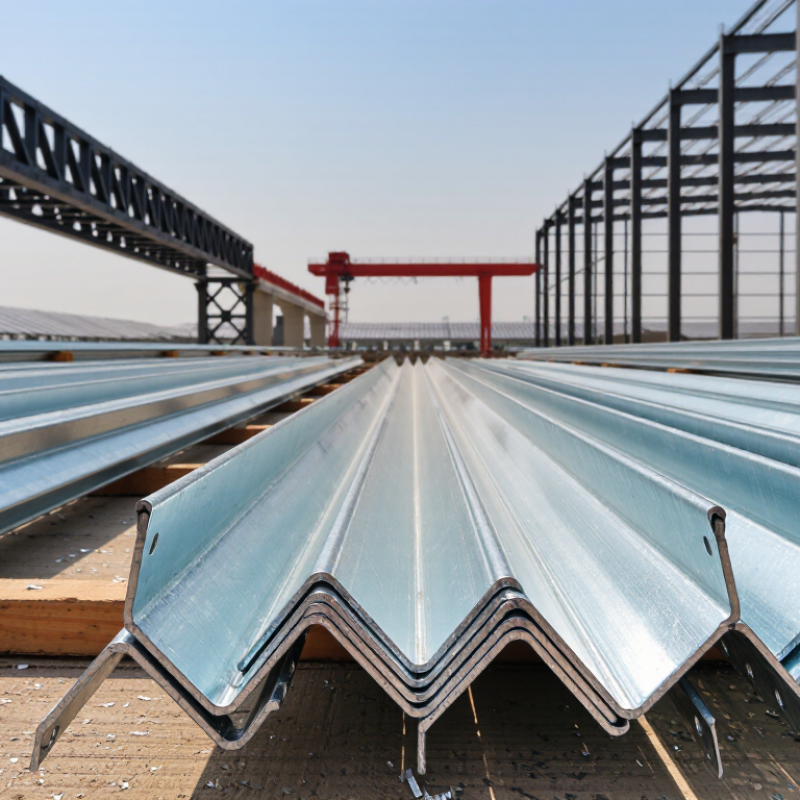
A Galvanized Steel Angle Bar combines structural strength with a metallurgically bonded zinc coating. Hot-dip galvanizing protects exposed edges, bolt zones, and outdoor surfaces more consistently than many basic paint systems. Gregory Crawford, P.E., former executive director of the American Galvanizers Association, has stated, “Hot-dip galvanizing provides long-term corrosion protection with minimal maintenance.” That principle matters on remote projects, where repainting can require cranes, road access, and costly labor. The coating also offers visible damage control. Bare steel appears quickly when protection fails.

Still, galvanizing is not magic. Drainage, venting, steel chemistry, coating thickness, and transport damage require inspection. That assumption needs testing. Project teams should compare the angle bar’s environment, loading, fabrication method, and applicable standards before ordering. ISO 1461 and ASTM A123 provide widely used references for hot-dip galvanized coatings. Experienced suppliers can also provide coating certificates, mill documentation, and traceable inspection records. In global projects, reliability is built through small details: clean holes, smooth corners, dry storage, and correctly protected cut ends. A Galvanized Steel Angle Bar may cost more initially, yet its lifecycle value can be stronger when maintenance access is difficult.
Why Choose Galvanized Steel Angle Bar for Global Projects?

Galvanized Steel Angle Bar: Profiles, Grades, and Global Standards

Galvanized steel angle bars come in equal and unequal profiles. Equal angles have matching legs, such as 50 × 50 mm. Unequal angles may use dimensions like 75 × 50 mm. These profiles support frames, platforms, bracing, and equipment bases. Thickness selection depends on load, connection design, and handling conditions. A thicker section is not automatically safer.

Steel grades should match the structural calculation and regional specification. Common choices include ASTM A36, ASTM A572, and European grades under EN 10025. These grades differ in yield strength, weldability, and chemical limits. The angle geometry and tolerances may follow EN 10056. Galvanizing requirements may follow ISO 1461 or ASTM A123/A123M. These standards are not interchangeable in every detail. Project engineers should compare coating thickness, inspection methods, and acceptance criteria before ordering.

Reliable procurement requires more than a grade name. Ask for heat numbers, mill certificates, dimensional reports, and coating inspection records. Check coating thickness at corners, edges, and drilled areas. Surface appearance matters, but it does not prove durability. Vent and drain holes also need practical review before hot-dip galvanizing. In project reviews, a neat drawing can hide drainage problems. That mistake is easy to miss. Atmospheric exposure, salt, trapped moisture, and transport damage can change performance. Standard compliance helps, but site conditions still deserve honest engineering judgment.

Hot-Dip Zinc Coatings: ASTM A123 and ISO 1461 Requirements

Why Choose Galvanized Steel Angle Bar for Global Projects?

Global infrastructure still depends heavily on steel. The World Steel Association reported 1.89 billion tonnes of crude steel production in 2023. Galvanized angle bars suit this scale because zinc protects exposed edges and simplifies maintenance planning. However, coating quality depends on the correct standard, not appearance alone.

ASTM A123 covers hot-dip galvanized coatings on fabricated iron and steel products. ISO 1461 provides similar requirements for finished steel items. For steel thicker than 6 mm, both standards commonly require about 85 μm average coating thickness and 70 μm local minimum thickness. These figures must be verified against the project edition. They are not decorative targets. Inspectors should check coating thickness, surface continuity, adhesion, and repair areas.

Small details matter. Drain holes help molten zinc leave hollow sections safely. Proper venting reduces trapped air and uncoated zones. Fabricators should submit steel chemistry, bath records, inspection results, and traceable certificates. The International Zinc Association reports that galvanizing represents roughly 60% of global zinc use, showing its established role in corrosion control. Still, coating life varies with humidity, salt exposure, pollution, and drainage. A thick coating is not automatically a long-life solution. Field reviews sometimes reveal poor detailing beneath an excellent zinc surface. That is the part project teams should question.

85 μm Zinc Coatings and Their Role in Atmospheric Corrosion Control

Why Choose Galvanized Steel Angle Bar for Global Projects?

An 85 μm zinc coating gives galvanized steel angle bar a practical defense against atmospheric corrosion. Zinc reacts with air and moisture, forming a protective patina over time. This layer slows further corrosion and protects exposed steel through sacrificial action. On construction sites, this matters near coastlines, industrial zones, and humid transport routes. However, 85 μm is not a universal guarantee. Service life depends on humidity, salt deposits, pollutants, and surface damage.

Experienced project teams should verify coating thickness through recognized inspection procedures. They should also review the expected atmospheric corrosivity category before selecting the section. Sharp corners and edges may receive less coating coverage during processing. Handling marks can create local weak points. These details are easy to overlook. Angle bars should be designed, cut, and drilled carefully. If field work exposes the steel, suitable zinc-rich repair materials can restore protection. Results vary when preparation is rushed.

Tips: Store sections above ground and keep drainage spaces between bundles. Avoid tight wrapping that traps condensation. Check coating thickness at several locations, not just one face. Record delivery conditions and inspection results. Small records often prevent larger disputes. Do not assume a bright surface proves uniform protection. A duller finish may still perform well. Project specifications should match local climate data, maintenance access, and the required service period.

Structural Strength: Yield Grades up to 355 MPa for Project Design

Why Choose Galvanized Steel Angle Bar for Global Projects?

Galvanized steel angle bar combines practical strength with durable corrosion protection. For structural designs, yield grades can reach up to 355 MPa, depending on the specified steel grade. This capacity supports frames, bracing, platforms, and equipment supports exposed to demanding loads. Engineers should not assume every angle bar reaches this value. Grade, thickness, temperature, and manufacturing standards all affect performance.

Hot-dip galvanizing adds a zinc coating that protects the steel from moisture and surface corrosion. It does not increase the steel’s yield strength. That distinction matters during design reviews. A 355 MPa grade may reduce section size, but connection details still require careful checking. Bolts, welds, holes, and local buckling can control the final design. In real projects, small connection errors often create larger installation problems.

Tips: Request verified mill certificates and coating records before approval. Confirm yield strength, chemical composition, section tolerances, and applicable project standards. Inspect cut edges and damaged coating areas after handling. It is tempting to rely on catalog values, but site conditions can challenge them. When coastal air, heavy rain, or temperature changes are expected, review corrosion allowances with a qualified engineer.

Why Choose Galvanized Steel Angle Bar for Global Projects?

Structural steel grades provide yield-strength options for project design. For nominal thicknesses up to 16 mm, EN 10025-2 grades S235, S275 and S355 are specified at 235, 275 and 355 MPa respectively.

Higher yield strength can support efficient structural designs, while hot-dip galvanizing provides a protective zinc coating for improved corrosion resistance in demanding environments.

Lifecycle Value: Zinc Corrosion Rates up to 100× Lower Than Steel

Why Choose Galvanized Steel Angle Bar for Global Projects?

For global construction projects, material life matters as much as purchase price. Galvanized steel angle bar uses a bonded zinc layer to protect the underlying steel. In many atmospheric conditions, zinc corrosion rates can be up to 100 times lower than unprotected steel. The exact result depends on humidity, salt exposure, pollution, and coating thickness. It is not a magic shield.

During site inspections, engineers often see galvanized angles perform well on frames, supports, walkways, and outdoor platforms. Zinc protects exposed steel by forming a stable surface layer. It also offers sacrificial protection when small scratches appear. That detail matters during transport and installation. Still, poor drainage can trap water against the angle. Cut edges and damaged areas require careful review. My practical concern is simple: designers sometimes trust the coating too much.

Tips: Specify the required coating thickness and inspect certificates before delivery. Keep bundles dry and separated during storage. Avoid placing angles directly on muddy ground. Seal or repair heavily damaged areas after cutting and drilling. Check joints where salt, dust, or condensation may collect. Local climate data should guide the maintenance interval, not a generic schedule. Shortcuts can become expensive.

Why Choose Galvanized Steel Angle Bar for Global Projects? - Lifecycle Value: Zinc Corrosion Rates up to 100× Lower Than Steel

Data Dimension Hot-Dip Galvanized Steel Angle Uncoated Carbon Steel Angle Lifecycle Value for Global Projects
Primary corrosion protection Metallurgically bonded zinc coating that provides barrier protection and sacrificial protection at exposed cut edges and scratches. No built-in protective coating; exposed steel relies on painting, maintenance, or environmental control. Reduces dependence on frequent site-applied maintenance coatings.
Typical minimum zinc coating thickness Approximately 45–85 µm for fabricated steel, depending on material thickness, under ISO 1461 coating categories. 0 µm of zinc coating. Provides a measurable, factory-applied protection layer before shipment and installation.
Representative zinc corrosion rate Common atmospheric ranges are approximately 0.1–0.5 µm/year in rural environments, 0.5–2 µm/year in urban environments, and 2–10 µm/year in highly industrial environments. Carbon-steel corrosion can commonly range from about 10–100 µm/year in atmospheric exposure, depending strongly on humidity, salts, pollutants, and wetness duration. In comparable conditions, zinc loss may be approximately 10–100 times lower than unprotected steel; actual ratios vary by site.
Illustrative coating-life calculation An 85 µm coating exposed to a 2 µm/year zinc-loss rate indicates roughly 42.5 years before theoretical coating consumption. A 50 µm steel-loss rate can reduce a 6 mm section by approximately 0.05 mm per year, before considering localized pitting. Useful for preliminary planning, but not a substitute for a project-specific corrosion assessment.
Maintenance requirement Generally low for normal atmospheric exposure; inspection remains necessary at joints, drainage points, crevices, and damaged areas. Regular inspection, surface preparation, repainting, and localized repair are typically required to control corrosion. Lower access, labor, shutdown, and logistics costs over the service life.
Performance in marine or de-icing-salt exposure Suitable when coating thickness, drainage, detailing, and inspection are selected for the relevant corrosivity category; salt exposure accelerates zinc consumption. Highly vulnerable to chloride-driven corrosion, especially where salt deposits remain wet or sections trap water. Improves resilience, but severe marine service may require duplex systems or additional engineering controls.
Edge and scratch protection Zinc provides sacrificial protection to small exposed steel areas, subject to coating continuity and environmental conditions. Scratches and cut edges can become direct initiation sites for steel corrosion. More forgiving during transport, handling, and installation.
Environmental and circularity considerations Steel and zinc are recyclable materials; longer service life can reduce replacement frequency and associated material use. May require more coating materials, maintenance visits, and replacement steel over time. Lifecycle assessment should include transport, coating, maintenance, replacement, and end-of-life recycling.
Best-fit applications Infrastructure, utility supports, solar structures, industrial frames, agricultural facilities, walkways, and outdoor fabricated steelwork. Controlled indoor environments, temporary works, or projects where a separate protective coating system is specified and maintained. Supports standardized procurement and consistent performance across different climates when correctly specified.
Technical note: Corrosion rates are indicative atmospheric ranges, not guaranteed project values. Actual performance depends on humidity, time of wetness, chloride and sulfur dioxide deposition, temperature, drainage, crevices, coating thickness, and local exposure category. The “up to 100× lower” comparison refers to favorable zinc-versus-unprotected-steel conditions and should be validated through a site-specific corrosion assessment.
Reference framework: ISO 1461 for hot-dip galvanized coatings; ISO 9223 for atmospheric corrosivity classification; published atmospheric corrosion data from international zinc and steel corrosion studies.

FAQS

What is a galvanized steel angle bar used for?

It supports frames, bracing, platforms, walkways, and equipment structures. Outdoor applications are common.

Can galvanized angle bars reach a 355 MPa yield strength?

Some specified grades can reach 355 MPa. Do not assume every section has this strength.

Does galvanizing increase the steel’s yield strength?

No. Galvanizing adds corrosion protection, but it does not increase the steel’s yield strength.

What affects the final structural performance?

Grade, thickness, temperature, manufacturing standards, connections, and local buckling all matter. Small errors can cause installation problems.

How does the zinc coating protect the steel?

Zinc shields the steel from moisture and surface corrosion. It can also protect small scratched areas sacrificially.

How much lower can zinc corrosion rates be?

In some atmospheric conditions, zinc corrosion rates can be up to 100 times lower than unprotected steel.

What should engineers check before approving the material?

Request mill certificates and coating records. Verify yield strength, chemical composition, tolerances, and project standards.

How should galvanized angle bars be stored and inspected?

Keep bundles dry and raised above muddy ground. Inspect cut edges, damaged coating, joints, and trapped water.

Is galvanized steel maintenance-free?

No. Salt, pollution, humidity, poor drainage, and scratches still require attention. It is not a magic shield.

What is one design mistake worth reconsidering?

Designers may trust the coating too much. Connections and local climate deserve equal attention.

Conclusion

Galvanized Steel Angle Bar is a reliable choice for global construction, infrastructure, and industrial projects because it combines structural strength with long-term corrosion protection. Available in various profiles and steel grades, including yield strengths of up to 355 MPa, it can be selected to meet different load-bearing and design requirements. Its angled geometry also provides efficient support, framing, bracing, and reinforcement in many applications.

Hot-dip galvanizing forms a durable zinc coating that helps protect the underlying steel from moisture and atmospheric exposure. Coating quality can be evaluated according to international requirements such as ASTM A123 and ISO 1461, with zinc layers of approximately 85 μm offering substantial protection in suitable environments. Because zinc corrosion rates can be up to 100 times lower than those of unprotected steel under comparable conditions, galvanized angle bars can reduce maintenance needs, extend service life, and deliver stronger lifecycle value for projects operating across diverse climates.


Sienna

Sienna

Sienna is a skilled marketing professional with a deep expertise in our company’s core products and services. With a passion for innovation and detail, she plays a pivotal role in crafting insightful blog posts that not only highlight the unique features of our offerings but also provide valuable......