Galvanized Steel C Channel is a practical framing component used in construction, manufacturing, and equipment support. Its C-shaped profile provides useful strength without the weight of a solid beam. The zinc coating adds protection against moisture, surface rust, and frequent handling. Still, galvanizing is not a substitute for correct design.
In building projects, contractors use Galvanized Steel C Channel for wall studs, ceiling supports, roof framing, door frames, and service enclosures. It also appears in solar panel structures, cable trays, machinery guards, and agricultural buildings. A channel may support a pipe run beneath a ceiling or reinforce a narrow metal frame beside a loading door. Small details matter.
Cold-formed steel educator Roger A. LaBoube offered a practical reminder: “A light-gauge member still demands serious attention to load, connection, and buckling.” That principle applies directly here. The channel’s thickness, span, steel grade, and hole pattern influence its real performance. A thicker channel is not automatically the best choice. It may add cost, weight, and installation difficulty.
The connection often decides whether the assembly performs well. Screws, bolts, welds, and anchors must suit the coating and the expected loads. Cut edges may also need suitable corrosion protection, especially outdoors. Local building requirements and engineering calculations should guide final selection. It is easy to oversimplify.
A useful installation can still fail through poor bracing, weak fasteners, or trapped water. Therefore, this article examines where Galvanized Steel C Channel works best, how professionals select it, and which practical mistakes deserve a second look.
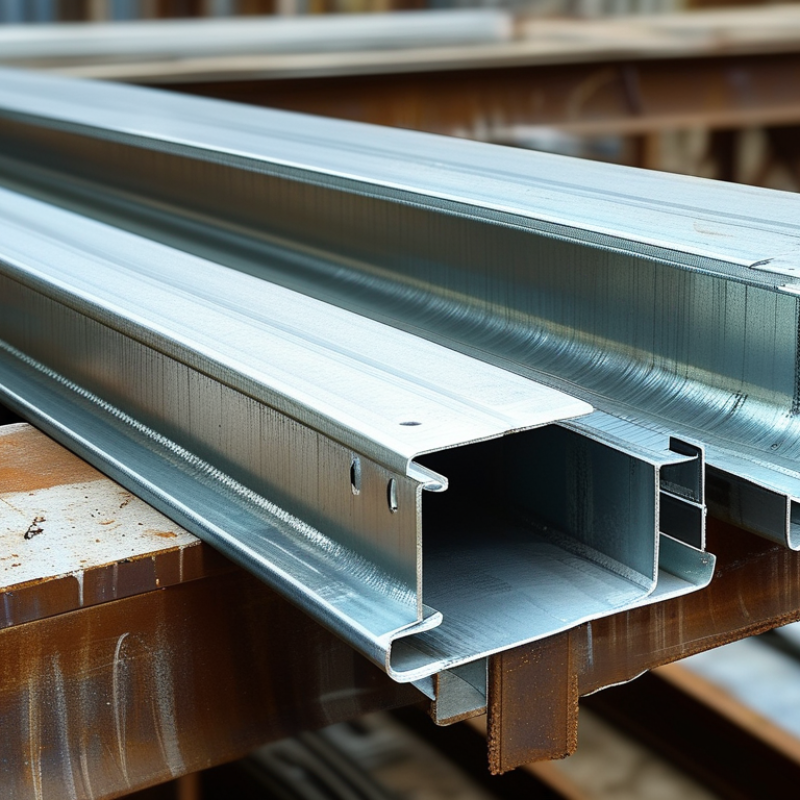
A galvanized steel C channel is a steel section shaped like the letter “C.” Its flat web forms the back, while two flanges extend outward. This geometry provides useful stiffness without the weight of a solid bar. A zinc coating protects the steel from moisture, surface rust, and many outdoor exposure conditions.
Manufacturers produce C channels in different depths, thicknesses, and lengths. Some are cold-formed for light framing, while heavier sections support greater structural loads. They can serve as framing members, equipment supports, cable tray supports, wall rails, and bracing components.
In construction, workers often connect them with bolts, screws, brackets, or welded fittings. A channel may look simple, but its dimensions affect strength significantly.
Small details matter. On site, cutting or drilling can expose bare steel at the edge. Touch-up protection may be needed, especially in damp areas. Galvanized surfaces also require compatible fasteners and careful handling to avoid damaging the coating. I have seen installers choose a channel by appearance alone, then discover excessive deflection after loading. That approach needs reconsideration. Load, span, connection design, corrosion exposure, and local building requirements should guide selection. A qualified engineer can verify whether the chosen section is suitable for the actual application. Not every C channel fits every frame.
Galvanized steel C channels are formed from flat steel strip into a rigid C-shaped section. Roll-forming machines bend the strip through several controlled stations. Each pass creates part of the final profile. This gradual shaping limits distortion and keeps dimensions consistent. Thickness, flange width, and channel depth depend on the expected load. Designers may also add punched holes for bolts, brackets, or cable supports.
The zinc protection is applied before or after forming. Hot-dip galvanizing immerses prepared steel in molten zinc, creating bonded protective layers. Electrogalvanizing uses an electrical process and usually produces a thinner, smoother coating. Both methods protect steel by separating it from moisture and sacrificing zinc when scratches expose the surface. The coating is useful, not indestructible. Sharp handling can still damage it.
Factory checks commonly include coating thickness, profile dimensions, straightness, and visible surface defects. Practical inspection matters most around cut ends, drilled holes, and welded areas. These locations may need compatible zinc-rich repair materials. In coastal or industrial settings, salt and chemicals can shorten service life. I have seen small drainage gaps become serious corrosion points when channels were installed without proper spacing. That detail is easy to miss. Galvanized C channels are widely used for framing, solar supports, equipment rails, and cable management because they combine workable strength with relatively low maintenance. Yet coating quality alone cannot correct poor design, trapped water, or unsuitable fasteners.
| Data Dimension | Typical Information | Practical Significance |
|---|---|---|
| Product Form | Cold-formed steel section with a web, two flanges, and usually inward-facing lips. | The open C-shaped profile provides useful structural support while keeping the section relatively lightweight. |
| Primary Structural Use | Framing members for walls, ceilings, partitions, roof systems, and light structural assemblies. | The channel can transfer compressive, tensile, and shear forces when correctly selected and connected. |
| Secondary Uses | Equipment supports, cable-tray brackets, solar-panel subframes, guardrails, machinery bases, and general fabrication. | Its straight profile and pre-punched or drilled versions can simplify installation and alignment. |
| Base Material | Low-carbon steel sheet or strip formed into the required channel profile. | Steel provides high strength and stiffness compared with many nonmetallic framing materials. |
| Common Manufacturing Method | Steel strip is decoiled, leveled, roll-formed through successive rollers, cut to length, and inspected. | Roll forming produces consistent dimensions and is efficient for long, uniform sections. |
| Hole and Slot Processing | Holes or slots may be punched before roll forming or drilled after forming, depending on the design. | Factory-prepared openings can reduce field cutting, but they must not compromise required load capacity. |
| Galvanizing Process | In hot-dip galvanizing, cleaned steel is immersed in molten zinc, commonly maintained at approximately 450°C. | The zinc coating bonds metallurgically to the steel and provides durable corrosion protection. |
| Alternative Zinc Protection | Some channels are produced from continuously galvanized sheet, in which the steel strip is coated with zinc before forming. | This method offers an evenly applied coating suited to continuous, high-volume production. |
| Protection Mechanism | Zinc protects steel by acting as a physical barrier and by providing sacrificial, cathodic protection at exposed areas. | Small scratches may receive protection from the surrounding zinc, although severe damage should still be repaired. |
| Coating Appearance | Typical surfaces range from bright silver to matte gray; hot-dip coatings may show a visible zinc crystal pattern. | Appearance can vary with steel chemistry, cooling conditions, and the galvanizing process without necessarily indicating poor performance. |
| Corrosion Performance | Service life depends on zinc coating thickness, moisture, pollutants, salt exposure, drainage, and contact with other metals. | Galvanized channels generally perform well in normal indoor and outdoor environments when water is not trapped. |
| Design Consideration | Capacity is affected by section depth, flange width, thickness, unsupported length, bracing, connection method, and local buckling. | Selection should be based on structural calculations and applicable building or engineering standards rather than profile size alone. |
| Connection Methods | Bolts, self-drilling screws, rivets, welds, clamps, and proprietary mechanical fittings may be used where appropriate. | Connections must be compatible with the coating and designed for the expected loads, vibration, and environment. |
| Welding Note | Welding galvanized steel can release zinc oxide fumes and may remove local coating protection around the weld. | Use suitable ventilation, personal protective equipment, qualified procedures, and an approved repair coating after welding. |
| Installation Advantage | Standardized lengths, low maintenance requirements, and easy cutting and fastening support efficient construction. | Reduced fabrication time can lower installation effort, especially in repetitive framing and support applications. |
| Storage Requirement | Store channels off the ground in a dry, well-ventilated area and prevent prolonged contact with standing water. | Good storage practices help prevent wet-storage staining and preserve the zinc coating before installation. |
Galvanized steel C channel is widely used where builders need a light, repeatable structural member. Its C-shaped profile resists bending while keeping material use moderate. Common applications include wall studs, ceiling grids, roof purlins, door frames, cable supports, and equipment platforms. It also appears in agricultural buildings, warehouses, and modular construction.
The American Galvanizers Association’s atmospheric corrosion data estimates that a 100-micrometre zinc coating may provide roughly 40 years before significant maintenance in industrial environments. Rural exposure can exceed 100 years, while severe marine exposure may reduce service life to about 20 years. These figures support C channel use around exterior framing, but they are not guarantees. Moisture, salt, trapped water, and damaged edges can change performance quickly.
Cold-formed steel design standards require engineers to check buckling, connection strength, and local loads. A channel supporting a cable tray may need only simple bracing. A roof purlin faces different forces. Site experience matters here. Cut ends should receive suitable corrosion protection, and fasteners must match the exposure conditions. World Steel Association data reported global crude steel production near 1.9 billion tonnes in 2023, showing the material’s continuing industrial importance. Still, choosing a C channel by appearance alone is a weak practice. Load tables, coating thickness, span, and installation details deserve careful review.
Galvanized steel C channel supports walls, ceilings, roof edges, cable trays, and light equipment frames. Its C-shaped profile provides useful bending strength with less material than a solid bar. The zinc coating helps resist moisture and corrosion, especially in warehouses, parking structures, and semi-exposed areas. However, “galvanized” does not mean maintenance-free.
Selection should begin with the actual load, span, and support spacing. Check channel depth, flange width, thickness, and steel yield strength against the project drawings. A deeper channel may reduce deflection, but it can complicate connections. For indoor dry spaces, a lighter coating may be adequate. Outdoor or humid locations usually require a heavier coating class, such as G90 under ASTM A653. G90 represents 0.90 ounces of zinc per square foot across both surfaces.
Exposure matters greatly. The Galvanizers Association service-life tables evaluate coating durability by atmospheric conditions, not by coating label alone. Near saltwater, cut edges, trapped water, and dissimilar-metal contact deserve special attention. AISI S100 provides the structural design framework for cold-formed steel members, including buckling checks. World Steel Association’s World Steel in Figures 2024 recorded about 1.89 billion tonnes of crude steel production in 2023, reflecting the material’s broad industrial availability. Still, availability should not replace engineering judgment. I have seen projects choose channels by price, then discover excessive vibration or difficult fastening. Verify loads, corrosion exposure, connection details, and local code requirements before ordering.
Galvanized steel C channels are commonly used for framing, cable and pipe supports, equipment bases, solar mounting structures, and light structural assemblies. The chart compares standardized zinc-coating designations used when selecting a channel for different exposure conditions.
How to select: Choose the channel size and thickness according to the required span, load, deflection limit, and connection method. Select a higher zinc-coating designation when the channel will face greater moisture, condensation, or outdoor exposure. The coating values shown represent nominal total zinc mass on both surfaces under ASTM A653 designations.
Galvanized steel C channel supports wall framing, roof edges, cable trays, equipment guards, and light structural bracing. Its C-shaped profile resists bending while keeping weight manageable. The zinc coating helps protect exposed steel from moisture and corrosion. The American Galvanizers Association reports that zinc can corrode 30 to 100 times more slowly than unprotected steel in similar conditions. Real service life still depends on humidity, salt, pollution, and coating thickness.
During installation, confirm the channel size, thickness, span, and load tables before cutting. Use compatible galvanized fasteners, and keep drainage paths open. Cut edges and deep scratches need repair according to ASTM A780 recommendations. I often inspect newly installed channels twice because small burrs can damage cables or gloves. Do not ignore sharp edges. When welding is unavoidable, provide ventilation and control zinc fumes. The U.S. Bureau of Labor Statistics recorded 1,069 construction fatalities in 2022, including 395 falls to lower levels, so secure platforms and fall protection matter.
Tips: Store channels above the ground, with spacers between bundles. Check for white rust, trapped water, loose bolts, and coating damage every six to twelve months. Replace severely bent sections rather than forcing them straight. A perfect installation is unlikely; careful rechecking prevents expensive mistakes. Allow extra attention near coastal air, chemical storage, and roof penetrations.
: It supports wall studs, ceiling grids, roof edges, door frames, cable trays, and light equipment platforms. It is widely used.
The shaped profile resists bending while using less material than a solid bar. That balance matters.
Check the load, span, support spacing, channel depth, flange width, thickness, and steel strength. Do not choose by appearance alone.
A deeper channel may reduce deflection, but it can make connections harder. Bigger is not always easier.
It suits warehouses, parking structures, agricultural buildings, modular frames, and partly exposed construction. Dry interiors need less protection.
Service life depends on moisture, salt, coating thickness, and damaged edges. Rural conditions may exceed a century. Severe marine exposure may last about twenty years.
No. Inspect cut ends, trapped water, fasteners, and damaged coating areas. Galvanized does not mean permanent.
Use suitable corrosion protection and prevent water from collecting inside or around the channel. Dissimilar metals need attention.
Review load tables, buckling risk, connection strength, local loads, span, coating class, and local building requirements. I would verify twice.
Choosing a channel only because it is cheap or readily available can cause vibration and difficult fastening. That shortcut can fail.
A Galvanized Steel C Channel is a strong, C-shaped metal profile designed to support, frame, or reinforce structures. Its steel core provides reliable load-bearing strength, while a protective zinc coating helps resist rust, moisture, and everyday environmental exposure. The channel is commonly used in construction, equipment frames, wall and ceiling systems, roof supports, cable management, and other structural applications where durability and a clean, practical profile are important. Its open shape also makes it easier to connect with bolts, screws, brackets, and other fastening components.
Selecting the right Galvanized Steel C Channel requires consideration of its dimensions, thickness, load capacity, span, installation environment, and connection method. During installation, accurate measurement, suitable fasteners, proper alignment, and safe handling are essential for dependable performance. Although galvanization reduces maintenance needs, the surface should still be inspected periodically for scratches, cutting damage, or trapped moisture. Any exposed areas should be appropriately protected, helping extend the channel’s service life and maintain the safety and stability of the completed project.
Minjie Steel