Top 10 Hollow Section Square Pipe Suppliers Worldwide

Time:2026-10-13 Author:Isabella
0%

Choosing reliable suppliers for Hollow Section Square Pipe requires more than comparing catalog prices. Buyers must examine manufacturing experience, dimensional accuracy, steel grades, welding quality, and delivery performance. A square section may look simple, yet a small wall-thickness variation can affect load capacity, fabrication, and installation. This guide introduces ten suppliers serving international markets, based on practical factors such as production capability, quality systems, export experience, and customer support.

Evidence matters here. Look for mill test certificates, clear tolerance data, traceability records, and compliance with recognized standards, including ASTM, EN, or equivalent specifications. Site audits and sample inspections can reveal details that brochures often hide, such as uneven corners, rough weld seams, or inconsistent protective coatings. Logistics also deserve attention. A supplier may offer excellent steel but struggle with container loading, documentation, or urgent replacement orders. Small details matter.

No supplier fits every project.

The companies discussed may serve different industries, from structural construction and agricultural equipment to machinery frames and architectural fabrication. Their strengths should be evaluated against your required dimensions, coating environment, order volume, and delivery region. This overview is not a substitute for technical verification or contract review. Supplier capabilities can change, and published information may become outdated. That is worth remembering. Readers should request current certifications, production samples, and written specifications before making a purchasing decision. With careful comparison, this list can support a more informed and dependable sourcing process worldwide.
Top 10 Hollow Section Square Pipe Suppliers Worldwide

What Is a Hollow Section Square Pipe?

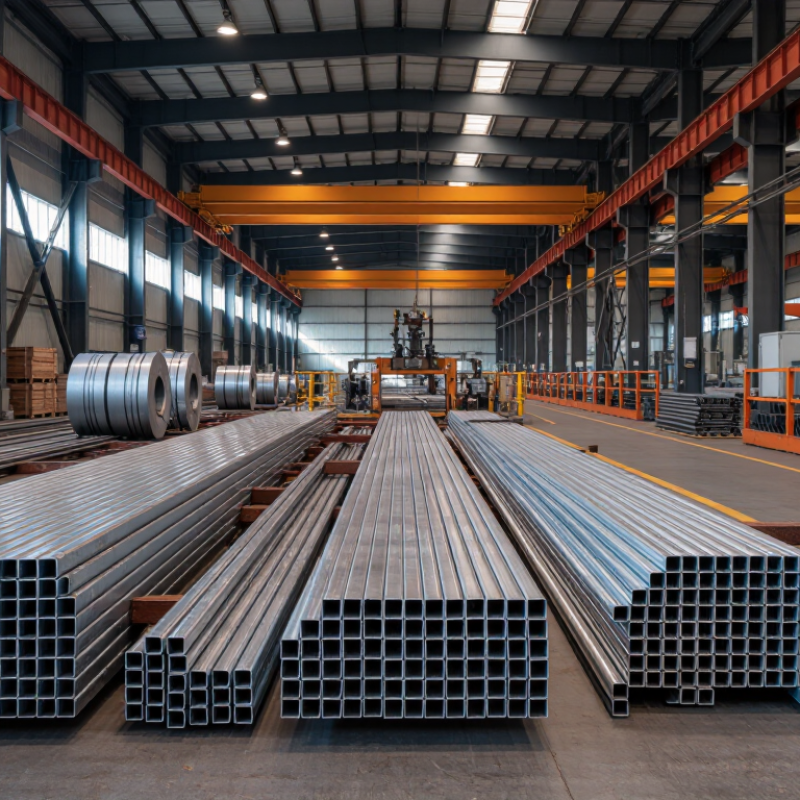
A hollow section square pipe is a steel tube with a square outside profile and an empty center. Its four flat sides create a balanced shape for construction and fabrication. The hollow core reduces weight while preserving useful strength. That efficiency makes it different from a solid steel bar.

Manufacturers usually form steel strip into a square shape and join the seam by welding. Some products are cold-formed, while others receive heat treatment for more controlled properties. Wall thickness, outside dimensions, corner radius, and steel grade affect performance. A pipe with thin walls may look strong but can buckle under compression. Geometry matters greatly.

These sections support frames, columns, machinery bases, fences, and architectural structures. Their straight surfaces simplify cutting, welding, and connection work. They also resist twisting better than many open profiles. However, hollow spaces can trap water when drainage is poorly designed. That detail is easy to overlook.

When comparing suppliers, buyers should request dimensional tolerances, material certificates, weld inspection records, and coating information. Regional standards may use different names for similar products, so the project specification must guide selection. In practical quality reviews, I have seen attractive surfaces hide inconsistent wall thickness. A polished finish proves little. Reliable purchasing depends on traceability, measured samples, and clear technical communication.

Key Factors for Evaluating Global Pipe Suppliers

Top 10 Hollow Section Square Pipe Suppliers Worldwide

Evaluating global square pipe suppliers requires more than comparing prices. Check steel grades, wall thickness, outside dimensions, and permitted tolerances. Reliable suppliers provide mill test certificates, chemical analysis, and mechanical test results for each production batch. Their documents should match the heat number marked on the pipe bundle. Small inconsistencies matter.

Production capability deserves close inspection. Ask about welding methods, forming equipment, length limits, and surface treatment. A serious supplier can explain how it controls corner radius, weld strength, and dimensional accuracy. Request recent inspection photographs, sample reports, and independent test records. A clean website is not proof.

Supply reliability also depends on communication and logistics. Confirm monthly capacity, packaging methods, loading procedures, and export experience. Bundles should arrive with clear labels, protected edges, and moisture control where needed. Review payment terms, delivery schedules, replacement procedures, and technical support before signing an agreement. References from similar construction projects can reveal more than sales claims.

Price remains important, but it should not lead the evaluation. A cheaper pipe may create costly delays, rejected inspections, or difficult site fitting. I would also question unusually perfect promises. No supplier review is complete, and my own checklist may miss local certification requirements. Independent inspection before shipment can reduce that risk.

Top 10 Hollow Section Square Pipe Suppliers Worldwide

Top 10 Hollow Section Square Pipe Suppliers Worldwide

The top 10 hollow section square pipe suppliers worldwide are usually judged by quality, capacity, and delivery consistency. Strong suppliers offer structural steel pipes for construction, machinery, frames, and infrastructure projects. They provide multiple sizes, wall thicknesses, and steel grades for different load requirements.

Reliable manufacturers maintain controlled forming and welding processes. Their factories check dimensions, corner radius, surface condition, and weld integrity. Many follow ASTM, EN, JIS, or equivalent specifications. Mill certificates, chemical analysis, and mechanical test reports should accompany each shipment. Buyers should also confirm whether galvanizing, cutting, bundling, and custom packing are available.

The leading ten suppliers often serve several continents through regional warehouses and established freight networks. Their practical experience helps reduce delays when projects require repeat batches or unusual dimensions. Communication matters too. A technically capable supplier can still fail when drawings, tolerances, or inspection plans are misunderstood.

No ranking is perfect. Short note. Market position can change with capacity, raw material costs, and delivery performance. Buyers should compare recent test records, production lead times, corrosion protection, and after-sales response. A factory visit or independent inspection adds useful evidence before a large order. In my view, the best supplier is not always the largest one; it is the partner that documents every critical detail and responds clearly when something goes wrong.

Product Standards, Manufacturing Processes, and Quality Control

For a Top 10 global square pipe supplier, product standards reveal more than a polished catalog. ASTM A500, EN 10219, and JIS G3466 define different limits for strength, dimensions, and testing. Buyers should request the exact grade, wall thickness, corner radius, and permitted tolerances. In 2023, the World Steel Association reported about 1.89 billion tonnes of crude steel production worldwide. That scale supports broad supply, but it does not guarantee consistent hollow sections.

Manufacturing quality begins with verified coil or plate chemistry. Suppliers commonly use electric resistance welding, followed by sizing, straightening, cutting, and surface inspection. Strong facilities record weld temperature, forming pressure, and dimensional results. ISO 9001 certification can support process control, while EN 10204 Type 3.1 inspection documents provide traceable test results. I would still check batch numbers against mill certificates. Paperwork can be correct, yet the bundle may tell another story. Small gaps matter.

Tips: Ask for recent tensile, yield, elongation, and impact-test data. Confirm whether testing follows the quoted standard, not a similar one. Inspect sample bundles for ovality, twist, dents, and uneven weld lines. A 2024 quality review should include third-party inspection when project risk is high. Suppliers should also explain nonconformance handling, calibration intervals, and corrective actions. Perfect control is unlikely. Visible evidence is better.

How to Select the Right Square Pipe Supplier for Your Project

Choosing among the top 10 hollow section square pipe suppliers requires more than comparing prices. Start with the project’s load, span, welding method, coating, and delivery location. A supplier should provide dimensional tolerances, steel grade certificates, weld records, and independent test results. Traceability matters. Each bundle should connect to a heat number and production batch.

The World Steel Association reported 1,888.2 million tonnes of crude steel production worldwide in 2023. This scale creates many sourcing options, but capacity does not guarantee consistency. Request compliance with relevant standards, such as ASTM A500 or EN 10219, when applicable. Confirm whether testing covers yield strength, tensile strength, elongation, and impact performance. Ask for recent audit evidence, not only a polished brochure.

Logistics can quietly change the real purchase cost. Compare minimum order quantities, stock availability, packaging, port handling, and lead-time records. A strong supplier should explain how it manages shortages or dimensional defects. Price is only one variable. I have seen technically acceptable pipes become expensive after delayed shipments and rework. That assumption deserves challenge. Request sample sections when surface quality, corner radius, or coating adhesion affects installation. Also verify communication during one complete trial order, because responsive sales support does not always mean reliable production control. OECD steel market analysis has repeatedly highlighted excess global capacity, so a low quotation may reflect temporary pressure rather than sustainable efficiency.

FAQS

What should buyers check before comparing square pipe prices?

Check steel grade, wall thickness, outside dimensions, and permitted tolerances. Price alone can mislead. A cheaper pipe may cause fitting problems, rejected inspections, or project delays.

Which documents should a reliable supplier provide?

Request mill certificates, chemical analysis, and mechanical test results for each batch. The heat number should match the pipe bundle label. Small mismatches matter.

How can buyers evaluate manufacturing capability?

Ask about welding methods, forming equipment, length limits, and surface treatment. The supplier should explain corner-radius control and weld-strength testing. A clean website proves little.

What physical details should buyers inspect on sample pipes?

Check dimensions, ovality, twisting, dents, uneven weld lines, and surface condition. Look closely at the corners. Photos help, but physical samples provide stronger evidence.

How important are product standards and testing requirements?

Confirm the exact standard, steel grade, wall thickness, and testing method before ordering. Similar standards may have different strength and tolerance requirements. Do not assume they are interchangeable.

What quality-control questions should buyers ask?

Ask how the supplier controls welding temperature, forming pressure, cutting accuracy, and calibration intervals. Request recent tensile, yield, elongation, and impact-test records. Perfect control is unlikely.

How can buyers reduce shipping and delivery risks?

Confirm monthly capacity, production lead time, packaging, loading procedures, and export experience. Bundles should have clear labels and protected edges. Moisture control may be necessary.

Should buyers use independent inspection before shipment?

Independent inspection can verify dimensions, surface condition, documents, and batch identity before loading. It is especially useful for large or technically demanding orders. My checklist may miss local certification needs.

Conclusion

This article provides a practical overview of Hollow Section Square Pipe, including its structural design, common applications, and advantages in construction, manufacturing, infrastructure, and industrial projects. It explains the key factors used to evaluate global suppliers, such as material quality, dimensional accuracy, production capacity, delivery reliability, technical support, certifications, and overall value. The article also presents a comparison of ten leading supplier types worldwide without focusing on specific brand names, helping readers understand how different manufacturers may serve various project requirements.

In addition, the guide discusses product standards, forming and welding processes, surface treatment, inspection procedures, and quality control practices that influence pipe performance and durability. It concludes with a clear supplier-selection framework, encouraging buyers to consider project specifications, load requirements, environmental conditions, compliance needs, customization options, lead times, and after-sales service before making a final decision.


Isabella

Isabella

Isabella is a dedicated marketing professional with a sharp focus on driving brand growth and engagement through strategic content creation. With an extensive background in digital marketing, she combines her passion for storytelling with her keen understanding of industry trends to deliver......