In the domain of critical modern safety engineering, fire protection pipelines are the foundational arteries that preserve life and secure capital assets. The global demands for high-integrity piping systems have risen dramatically due to tighter regulatory standardizations and complex architectural designs. Modern municipal, commercial, and industrial facilities demand systems that not only resist high-pressure environments but also endure the corrosive stresses of static water storage and fluctuating ambient conditions over decades.
As a leading global manufacturer specializing in steel conduits, Tianjin Minjie Steel Co., Ltd. integrates state-of-the-art metallurgical technologies with robust structural designs. From high-grade hot-dip galvanized pipes to specialized grooved systems, our structural portfolio is engineered to meet the stringent demands of complex commercial environments, particularly within specialized industrial sectors across the European Union, including the landlocked alpine territory of Austria.
The Austrian market maintains some of the most rigorous fire safety standards globally. Regulated heavily by local fire prevention associations (such as the Österreichischer Bundesfeuerwehrverband), the ÖNORM standards, and local technical guidelines (TRVB - Technische Richtlinien Vorbeugender Brandschutz), engineering teams in Vienna, Linz, Graz, and Salzburg operate with absolute zero tolerance for component failure.
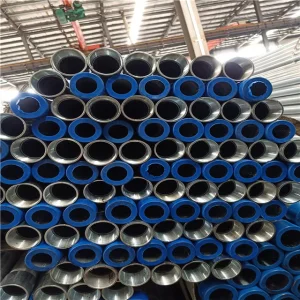
All steel tubes used for threading or grooving must fulfill strict chemical composition standards and pressure thresholds under European standard EN 10255. Our processes guarantee uniform yield strength and elongation capabilities.
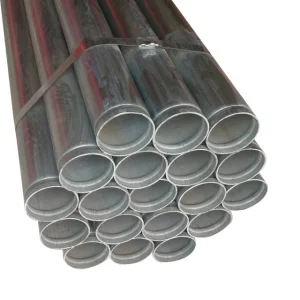
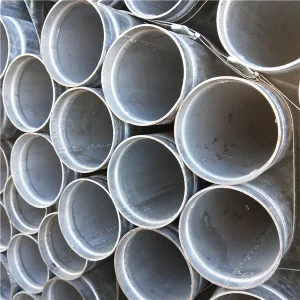
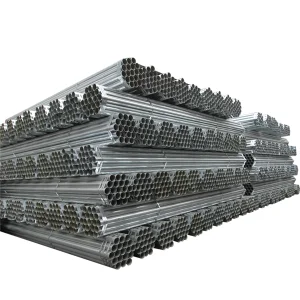
Austria's variable weather and alpine humidity demand high-durability coatings. Our hot-dip galvanization processes ensure robust protective barriers, keeping systems operational inside tunnels, hotels, and heavy industrial compounds.
With strict seismic design codes (ÖNORM EN 1998) applied to modern infrastructure in Alpine valleys, the utilization of grooved couplings and ductile shoulder joints ensures necessary pipe-run flexibility without leakage.
Austrian architectural trends prioritize sustainability and long-term operating efficiency. Consequently, designers demand structural components that minimize maintenance overheads. In historic refurbishments (such as landmark preservation properties in central Vienna) and state-of-the-art clean-tech complexes, fire suppression pipelines must fit compact spatial configurations, sustain hydraulic pressure integrity, and prevent rust-particle buildup that can clog delicate sprinkler nozzles.
Our products are tailored to the physical and spatial needs of Austria's diverse commercial structure. Below are key deployment sectors where our high-performance galvanized and grooved steel pipes provide security:
Austria's extensive highway system relies heavily on safe tunnel crossings. The high humidity and exposure to exhaust chemicals inside road tunnels accelerate corrosion. Our hot-dip galvanized pipes and shouldered grooved fittings maintain high structural stability, safeguarding fire-extinguishing networks and dry-riser pipelines against thermal expansion and ground movement.
With massive distribution warehouses in key transport junctions like Graz and Enns, ceiling-level early suppression fast response (ESFR) sprinkler systems are critical. The demand for large-diameter, lightweight, and high-pressure grooved pipes is met by our rolled grooved systems, facilitating rapid installation and minimizing structural load.
Integrating modern safety standards into classical properties in historic inner cities requires non-invasive, quick-assembly systems. Threaded and grooved steel pipes allow contractors to work in confined ceiling cavities without open-flame welding, mitigating risk and protecting historical architectures.
The fire protection industry is shifting toward smart, integrated networks. As automated buildings and advanced industrial facilities grow, the components forming fire safety lines must adapt. Our engineering vision is aligned with these developments to keep supply lines reliable and smart-ready.
Transitioning our production line to alloy-rich zinc-aluminum-magnesium coatings. This provides superior cut-edge protection and self-healing properties in high-moisture Alpine infrastructure, extending service life by up to 50% compared to traditional hot-dip galvanizing.
Developing comprehensive digital twins and Revit/BIM libraries for all our grooved, shouldered, and threaded components. This allows Austrian MEP engineers to simulate hydraulic flow rates, space layouts, and mechanical tolerances prior to site assembly, reducing installation error margins.
Manufacturing pre-engineered pipe runs compatible with fiber-optic sensor wraps and smart pressure transceivers, enabling commercial operators to identify structural wall thinning or micro-leaks in real time.
Established in 1998, Tianjin Minjie Steel Co., Ltd. has grown to become a cornerstone manufacturer and exporter of premier structural steel products. Our massive production base spans over 70,000 square meters, strategically located just 40 kilometers from XinGang Port (Tianjin)—the primary maritime gateway in Northern China. This logistics advantage enables smooth shipping routes to major European hubs like Rotterdam, Hamburg, and Adriatic ports serving Central Europe.
Our core manufacturing facilities house 4 advanced pre-galvanized product lines, 8 high-frequency Electric Resistance Welded (ERW) steel pipe lines, and 3 state-of-the-art hot-dip galvanized processing lines. Working in strict accordance with ASTM, DIN, JIS, and EN specifications, our processes operate under the internationally recognized ISO 9001:2015 Quality Management System.
Minjie holds 3 key structural patents for specialized connection systems: Grooved Pipes, Shouldered Pipes, and Victaulic-Compatible Quick-Assembly Systems. These technologies reduce field installation time while guaranteeing high pressure seals.
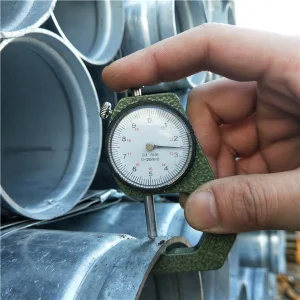
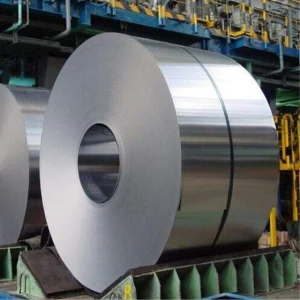
From chemical composition analysis of raw steel coils (primarily premium Q235 and Q345 grades) to hydrostatic pressure tests, non-destructive weld scans, and zinc coating thickness analysis, our testing ensures structural reliability.
Over the past two decades, our customer-centric model has earned partnerships in Germany, Australia, Singapore, South Korea, Saudi Arabia, and beyond. We participate in major international construction fairs, including the annual Canton Fair, consistently showcasing our engineering solutions to visiting procurement experts and structural engineers from around the globe.
In today's unpredictable economic environment, supply chain stability is as crucial as product quality. The integration of steel smelting, rolling, pipe fabrication, and galvanizing in the Tianjin industrial zone gives us a solid production base. We maintain direct supply agreements with leading steel mills, safeguarding our production lines against raw material price shocks and guaranteeing consistent chemical and mechanical grades.
By utilizing optimized production schedules and automated ERW pipe manufacturing lines, we reduce lead times by up to 30% compared to regional European mills. Our close proximity to XinGang Port means containers are dispatched swiftly, utilizing direct shipping lines to assure steady supply for large-scale developments in Austria.
For Austrian engineers, distributors, and general contractors, compliance with EU regulations is a critical requirement. Our pipeline products undergo systematic compliance audits. We guarantee that all structural steel coils and finished pipes conform to:
Through clear technical documentation, mill test certificates (MTC) according to EN 10204 3.1, and localized logistical coordination, we ensure our clients face no hurdles during customs clearance, local inspection, or final installation approvals.
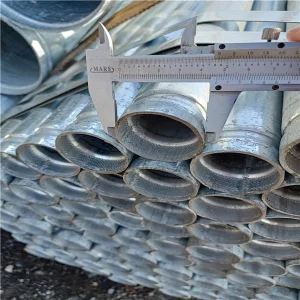
Yes. Our grooved steel pipes are manufactured to standard roll/cut groove dimensions, ensuring compatibility with Victaulic, Grinnell, and other standard mechanical joints used in EU and Austrian building designs.
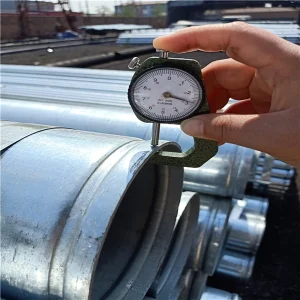
Every shipment is accompanied by a Mill Test Certificate (MTC) meeting EN 10204 3.1 standards. We execute hydrostatic testing, dimensional checks, flattening tests, and chemical inspections to verify compliance before cargo dispatch.
Standard production takes 20 to 30 days depending on volume and specification. Transit time from XinGang Port to primary European entry ports ranges between 35 and 45 days. We recommend planning a total window of 60 to 75 days for bulk custom orders.
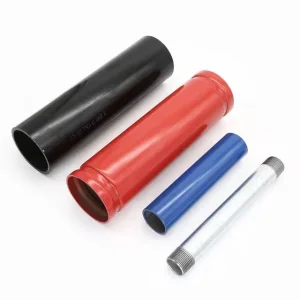
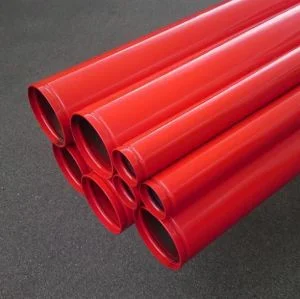
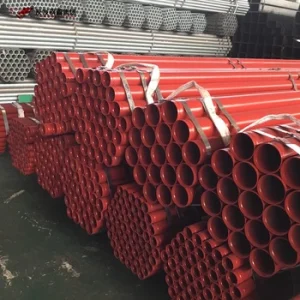
Yes. We offer both internal/external hot-dip galvanization and external polyester powder coating (specifically in RAL 3000 Fire Red or customized colors) to meet aesthetic and environmental specifications.
Our patented shoulder ring pipes allow simple, weld-free connection joints. This is ideal for rapid structural deployment in alpine regions, mine shafts, and temporary emergency networks where traditional welding is not feasible.
 Minjie Steel