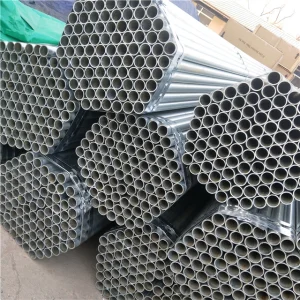
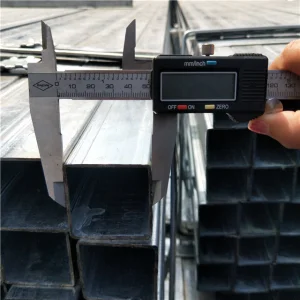
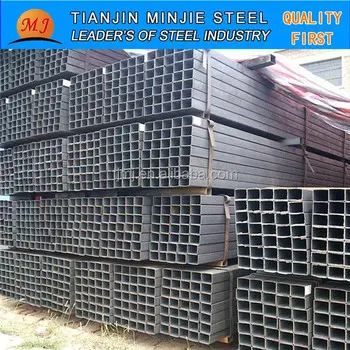
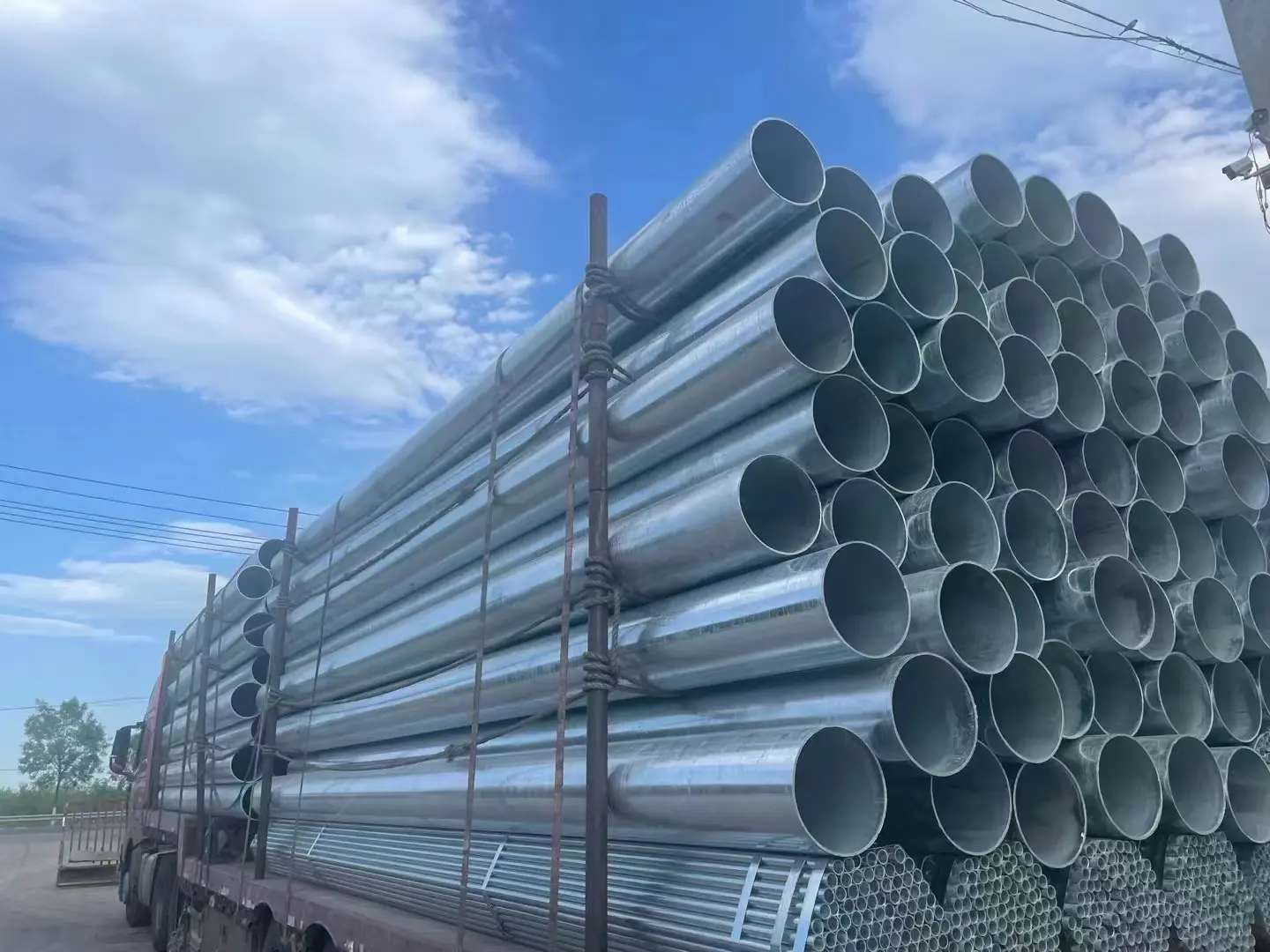
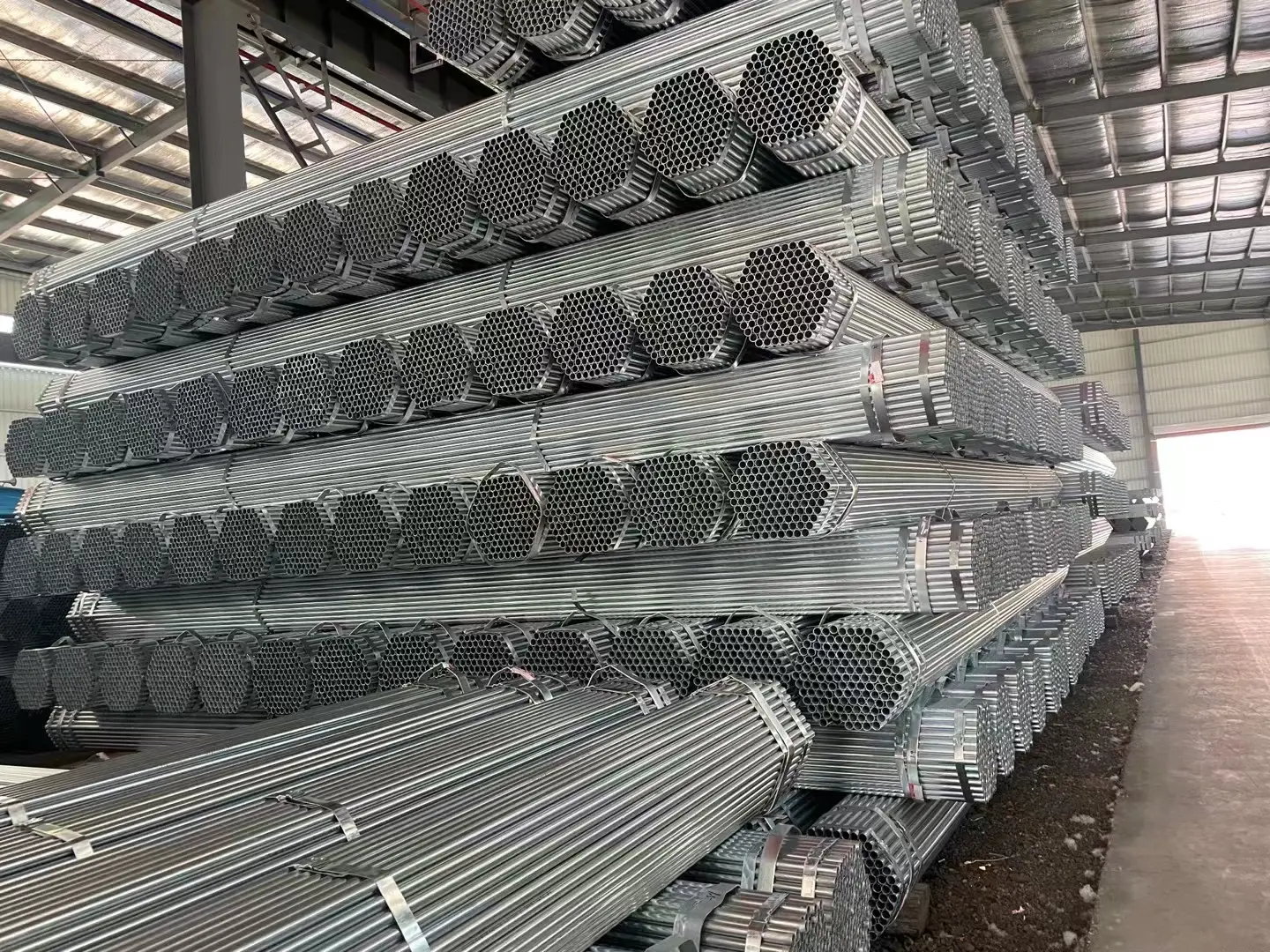
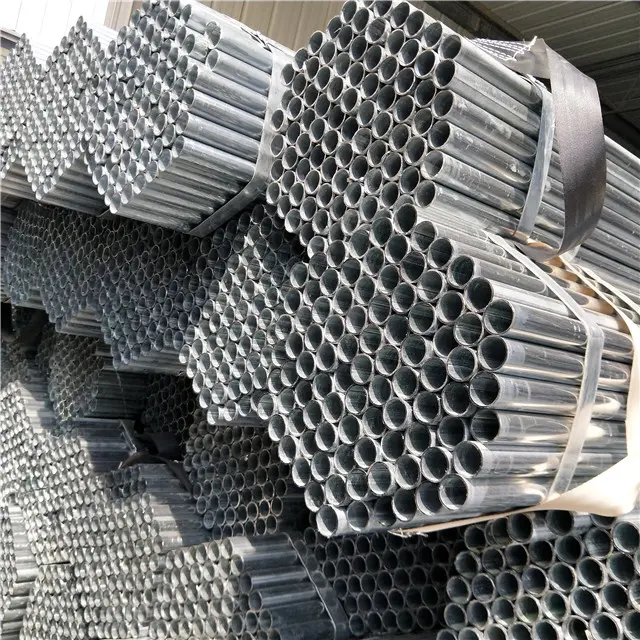
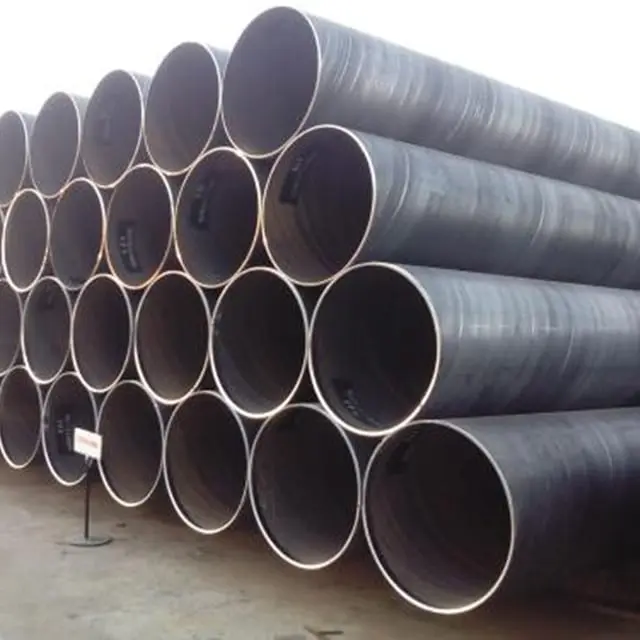
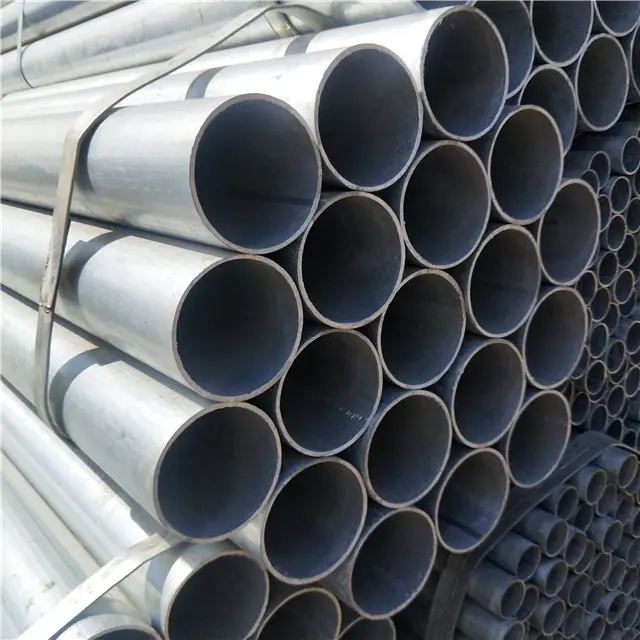
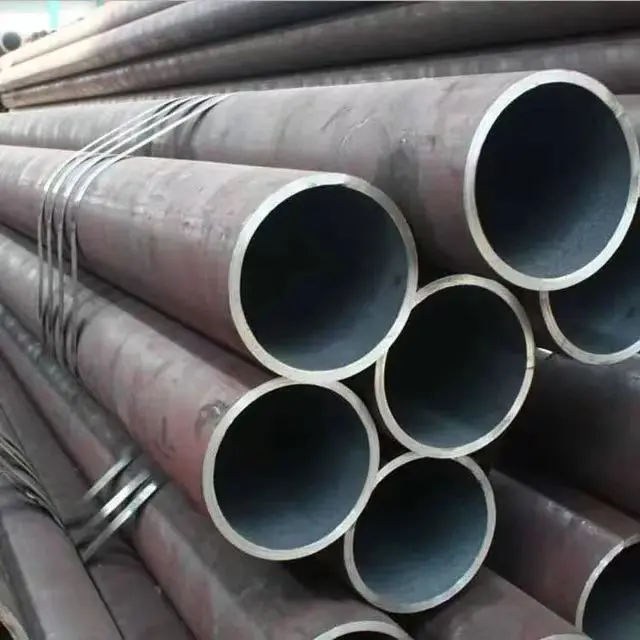
Direct supply from our modern manufacturing facilities. Hover over products to view specifications and explore our global export pipelines.
Unlocking the Technical Specifications, Standards Mapping, and Industrial Applications of High-Performance Zinc-Coated Pipelines.
In structural engineering, municipal piping, and heavy industrial distribution, Schedule 40 (Sch 40) galvanized steel pipes represent the primary standard for strength, durability, and corrosion mitigation. Defined by their standardized wall thickness relative to their outer diameter, Schedule 40 pipes offer a calculated ratio of mechanical resilience and hydraulic throughput. When galvanized through either hot-dip processing or advanced pre-galvanization methods, these pipes obtain a robust sacrificial barrier of zinc that prevents atmospheric, fluidic, and ground-level chemical oxidation.
Selecting the right steel grades—ranging from standard carbon structural grades like Q235B and Q345B to ASTM A53 Grade B and BS 1387 requirements—determines the load-bearing capacity and pressure ratings of physical systems. As a leading hub of global metallurgical engineering, China has established highly specialized industrial clusters in regions such as Tianjin. Here, advanced vertical integration allows factories to convert basic iron ore into high-specification ERW and HDG pipes under strict ISO 9001 certifications. This white paper details the engineering parameters, supply chain realities, and specialized installation formats for Schedule 40 piping networks.
Did you know? The term "Schedule" (Sch) refers to the relative wall thickness of a pipe. Under ANSI/ASME B36.10M, Schedule 40 is the most commonly utilized thickness for a vast array of fluid transportation and structural structural configurations globally. For sizes under NPS 10, Schedule 40 matches standard wall (STD) designations perfectly.
A structural comparison of NPS sizing, outer diameter, wall thickness, and weight guidelines across ASTM, BS, DIN, and JIS codes.
Procurement teams and design engineers must understand the exact physical parameters of the pipes they specify. Discrepancies between American ASTM standards and European EN/BS standards can lead to critical sizing mismatches, pressure failures, or structural installation issues. Below is a comprehensive reference mapping nominal pipe sizes (NPS) to exact dimensions for Schedule 40 configurations, along with structural equivalent tables.
| Nominal Size (NPS) | Outer Diameter (in) | Outer Diameter (mm) | Sch 40 Wall Thickness (in) | Sch 40 Wall Thickness (mm) | Plain End Weight (lb/ft) | Plain End Weight (kg/m) |
|---|---|---|---|---|---|---|
| 1/2" | 0.840 | 21.3 | 0.109 | 2.77 | 0.85 | 1.27 |
| 3/4" | 1.050 | 26.7 | 0.113 | 2.87 | 1.13 | 1.69 |
| 1" | 1.315 | 33.4 | 0.133 | 3.38 | 1.68 | 2.50 |
| 1-1/4" | 1.660 | 42.2 | 0.140 | 3.56 | 2.27 | 3.39 |
| 1-1/2" | 1.900 | 48.3 | 0.145 | 3.68 | 2.72 | 4.05 |
| 2" | 2.375 | 60.3 | 0.154 | 3.91 | 3.66 | 5.44 |
| 3" | 3.500 | 88.9 | 0.216 | 5.49 | 7.58 | 11.29 |
| 4" | 4.500 | 114.3 | 0.237 | 6.02 | 10.79 | 16.07 |
Standards Equivalency & Performance Indicators:
How raw iron steel is engineered, welded, galvanized, and verified inside our automated production units.
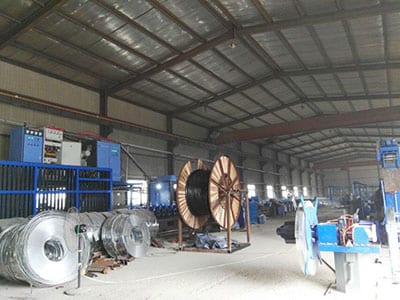
Utilizing high-frequency electric resistance welding (ERW), raw structural steel strips are continuously formed into perfectly round hollow sections. Electronic monitoring ensures optimal weld seam alignment, weld-bead control, and uniform mechanical properties across the pipe diameter.
Pipes undergo acidic pickling to strip oxides, followed by fluxing, and are then submerged in molten zinc at ~450°C. This chemical reaction forms iron-zinc alloy layers bonded to the pipe, achieving a zinc mass exceeding 500 g/m² (>70μm) for prolonged corrosion protection.
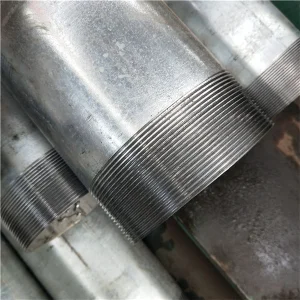
We provide multiple finish options to meet project needs, including: standard threaded and coupled (T&C) options, grooved designs for easy site connections, shouldered ends for specialized industrial couplings, and victaulic preparation for secure water networks.
Technical Innovation & Continuous Optimization: As part of our product roadmap, Tianjin Minjie has introduced Zinc-Aluminum-Magnesium coated alloy pipes. This coating system provides superior self-healing edge protection and outperforms standard galvanized coatings under high-salinity and coastal environments. By reducing the overall rate of coating degradation, this technology extends the operational lifespan of piping assets in challenging environmental conditions.
How different industries utilize galvanized Schedule 40 pipes for critical fluid and structural infrastructure.
The versatility of Schedule 40 galvanized steel pipe makes it a key component in both mechanical and structural fields. Its heavy wall profile manages both fluid pressure and physical stress, providing reliable service across diverse operational settings:
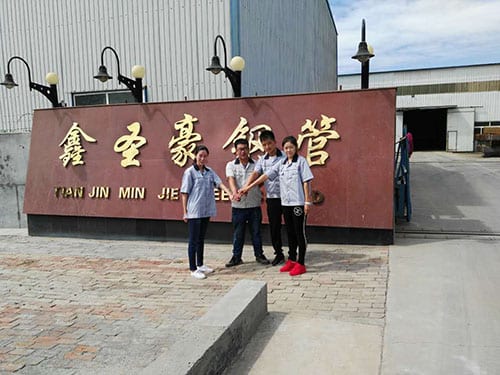
Established in 1998, Tianjin Minjie Steel Co., Ltd. operates a production campus spanning over 70,000 square meters. The facility is located 40 kilometers from XinGang Port in Tianjin, the largest deepwater shipping hub in northern China. This proximity enables efficient transport of bulk container shipments directly to global shipping lines.
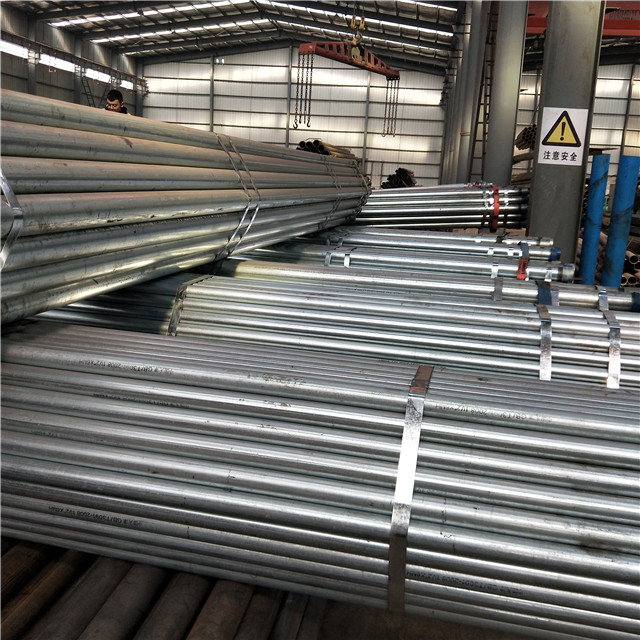
Equipped with 4 pre-galvanized product lines, 8 ERW steel pipe lines, and 3 hot-dip galvanized process lines, the factory maintains an annual output of over 300,000 tons. Vertical integration from raw coil processing to final pipe finishing minimizes production bottlenecks, ensures consistent raw material supply, and keeps lead times stable through varying market conditions.
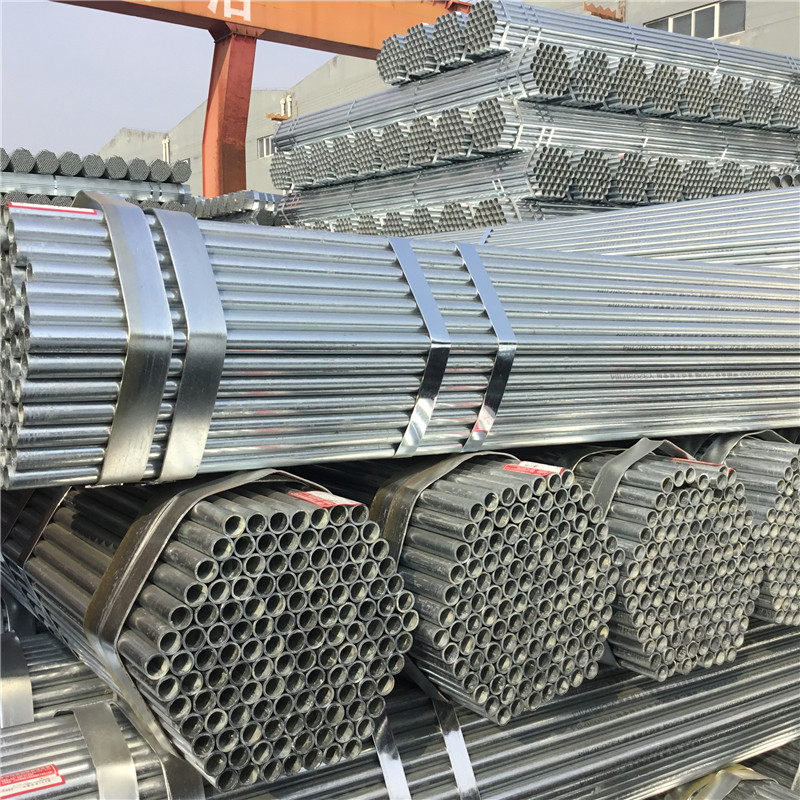
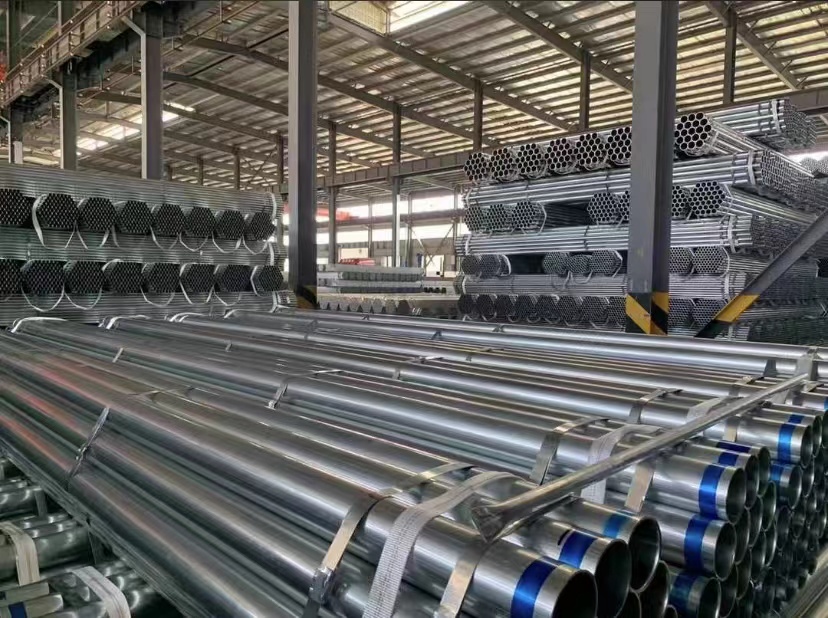
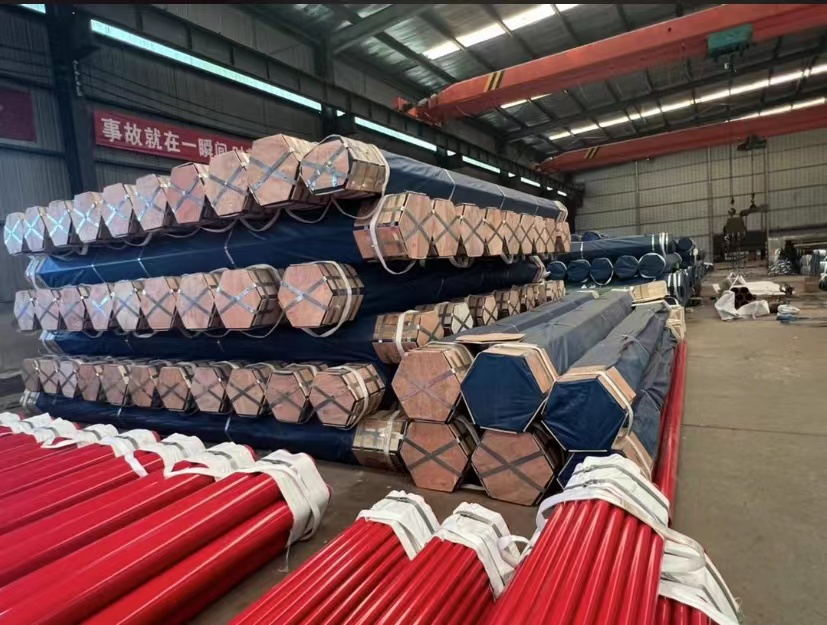
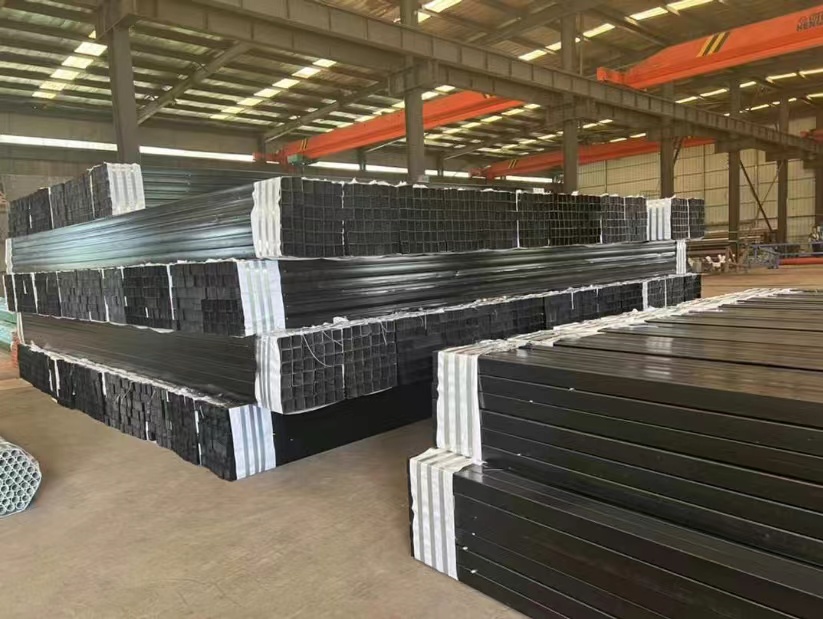
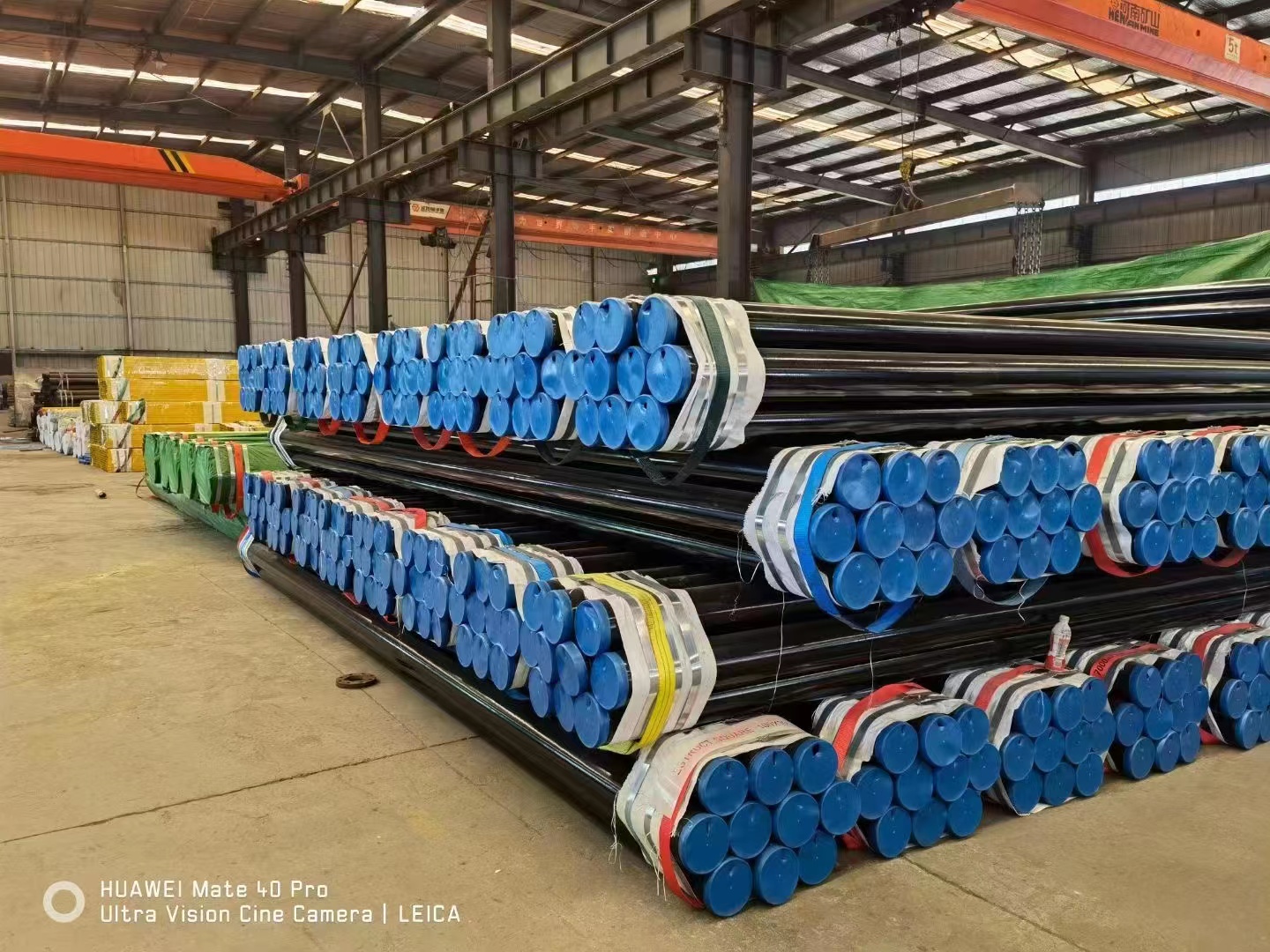
A look at how we support procurement needs across key international markets, verified by onsite inspections.
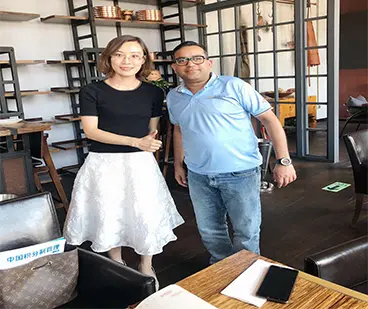
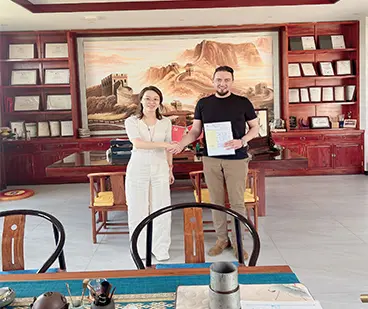
Our company is supported by experienced technical advisors in China and a professional global services team. Our products are exported to regional markets worldwide, building long-term commercial relationships through regular technical exchanges, trade fairs, and factory audits:
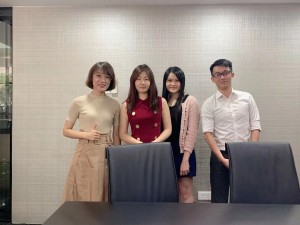
In September 2019, our team visited clients in Singapore to coordinate technical parameters for offshore piping and construction supply chains.
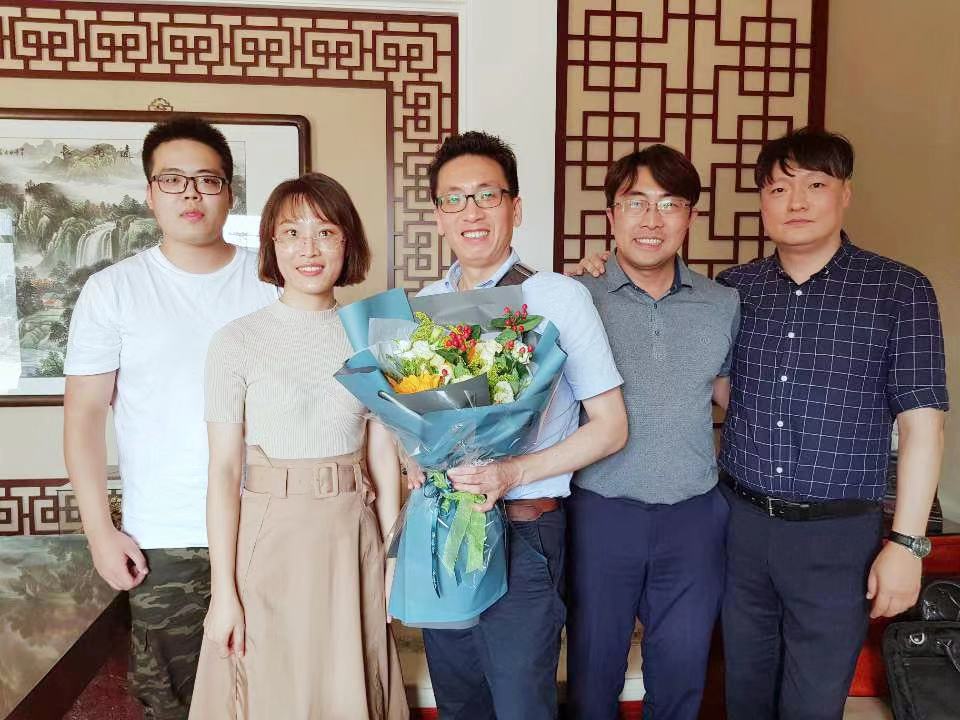
A Korean engineering client visited our factory in 2019 to collaborate on structural tolerances and customized drawings for local building projects.
Long-term Australian agricultural and industrial customers visited our Tianjin plant in November 2018 to audit our hot-dip galvanizing lines.

In 2019, Indian distributors selected our factory for a monthly supply program of structural steel components and scaffolding tubes.
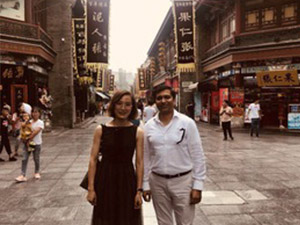
In June 2017, a Lebanese engineering group audited our high-frequency ERW lines and placed an initial order of 1,000 tons of fluid pipes.
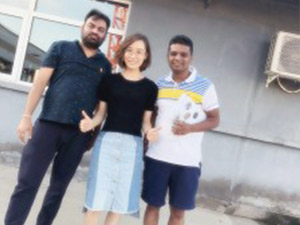
After meeting at the Canton Fair in 2018, our Saudi Arabian partners audited our facility to establish a direct supply channel for municipal infrastructure pipes.
Our quality control program covers the production process from raw material analysis to final pressure testing.
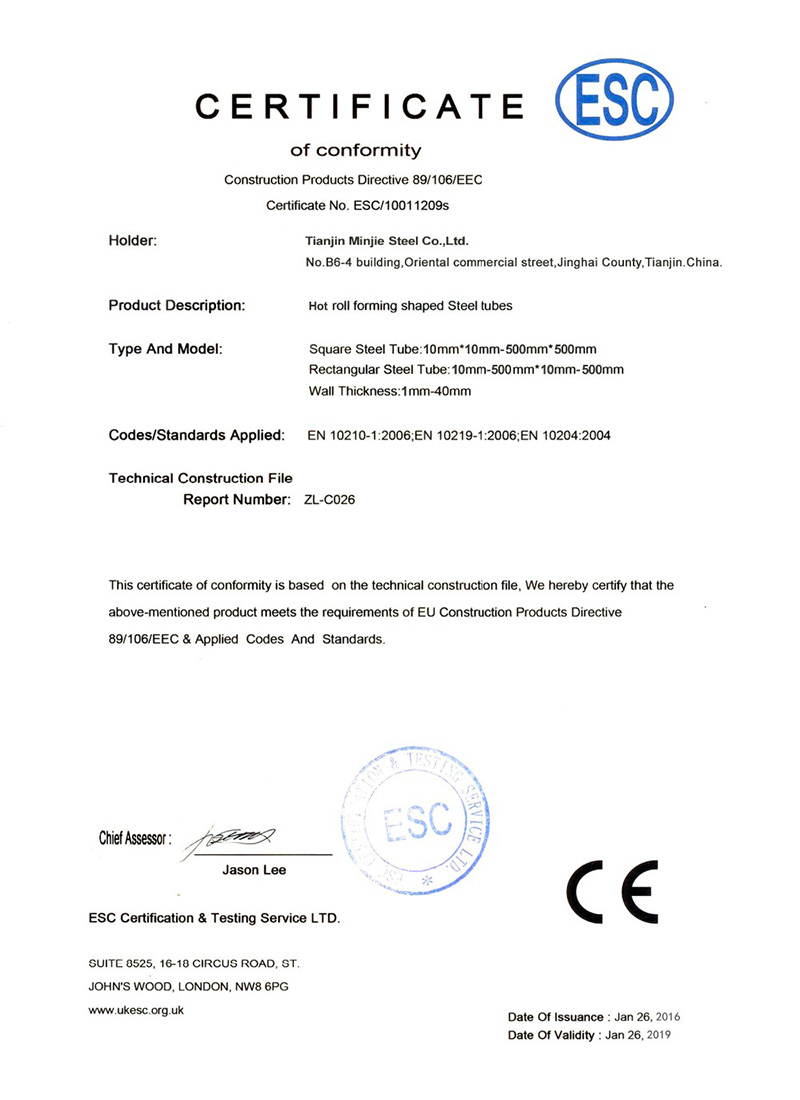
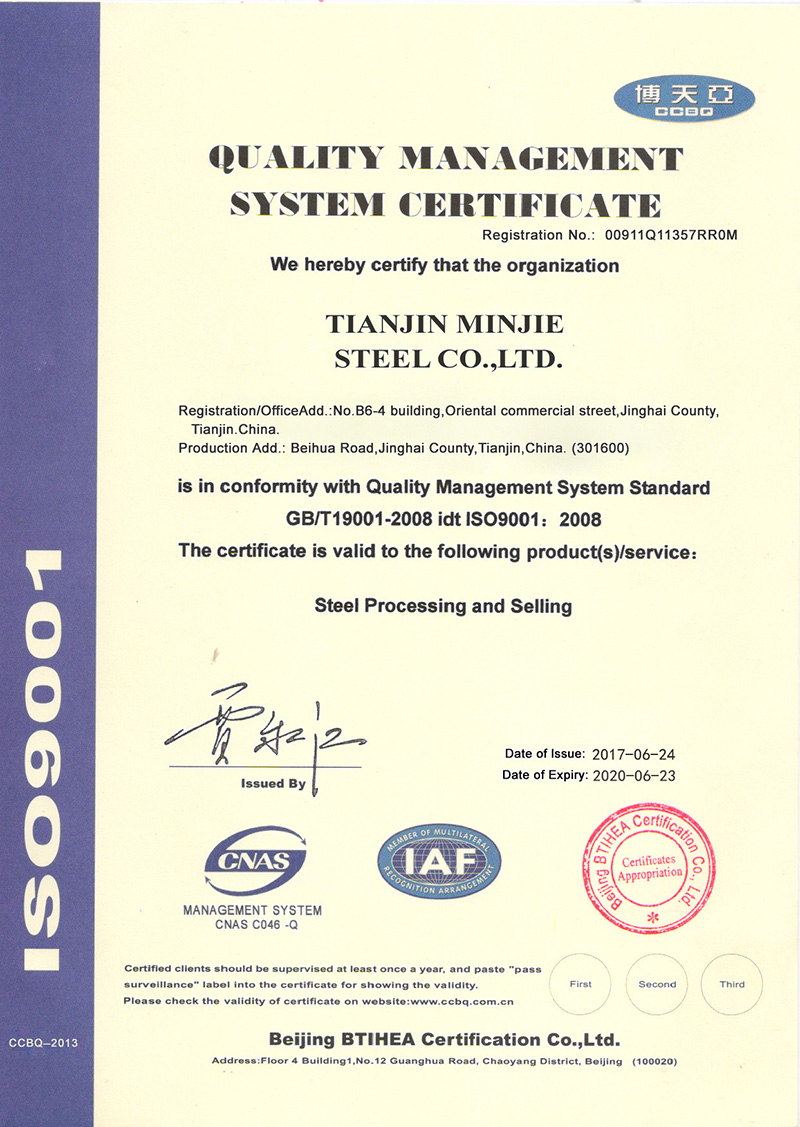
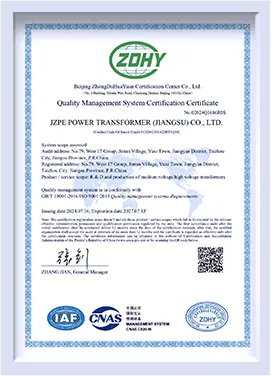
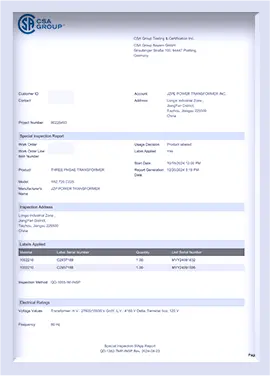
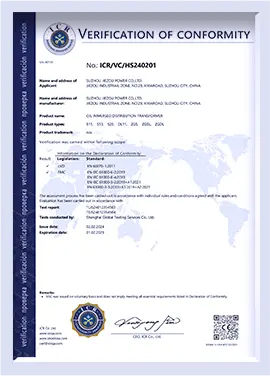
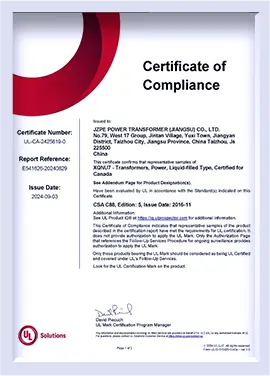
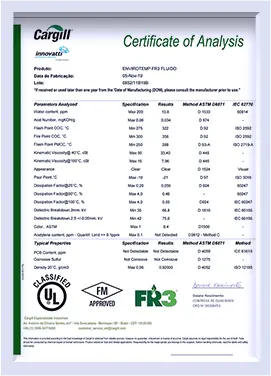
Tianjin Minjie Quality Management & Production System Certifications
Tianjin Minjie Steel Co., Ltd. operates under a certified ISO 9001 quality system. We hold three proprietary utility patents for specialized pipe joinery: grooved pipes, shoulder-jointed pipes, and victaulic connections. These connections improve installation speeds and help reduce labor costs on-site.
Every production batch is tested to confirm compliance with ASTM, EN, DIN, JIS, and GB standards. Standard testing includes hydrostatic testing to verify weld integrity under pressure, flattening and bending tests for structural ductility, and electromagnetic eddy-current testing for sub-surface inspection.
Answers to common technical, standard compliance, and logistical questions for international buyers.
Hot-Dip Galvanized (HDG) pipes are fabricated first and then dipped into molten zinc, coating both the interior and exterior of the pipe with a zinc layer typically between 60 to 80 microns thick (over 500 g/m²). Pre-galvanized pipes are formed from steel coils that have already been zinc-coated. This process yields a thinner, smooth zinc layer (usually 15 to 25 microns) on the outer surfaces, while the weld seam requires a metallized spray to restore corrosion protection.
Yes. We supply pipes manufactured to ASTM A53 Grade B standards, which specify minimum yield strength of 240 MPa (35,000 psi) and minimum tensile strength of 415 MPa (60,000 psi). These pipes undergo hydrostatic and non-destructive eddy-current testing, and we provide chemical and physical Material Test Reports (MTRs) with each batch.
We offer customized pipe end preparations based on application requirements: Threaded and Coupled (T&C) to ANSI B1.20.1 or BS21 standards, grooved ends for mechanical joints, and shouldered ends. We hold three utility patents covering groove, shoulder, and victaulic connections, which help secure joints in high-vibration systems.
Our plant is situated 40 kilometers from Tianjin's Xingang Port, the largest commercial port in Northern China. This close proximity reduces inland container transport costs, minimizes transit time to the port, and helps prevent shipping delays during peak export seasons.
Yes. We regularly work with third-party inspectors like SGS, Bureau Veritas, and TÜV. Customers can arrange for inspectors to audit raw materials, witness hydrostatic testing, measure coating thicknesses, and verify packaging dimensions prior to shipment.
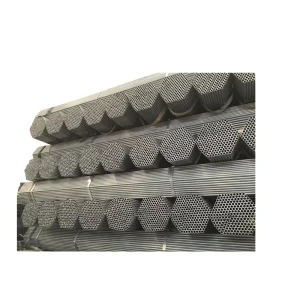
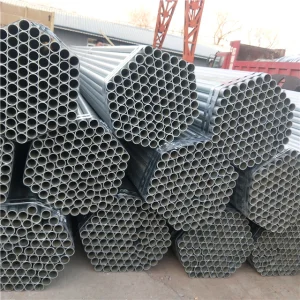
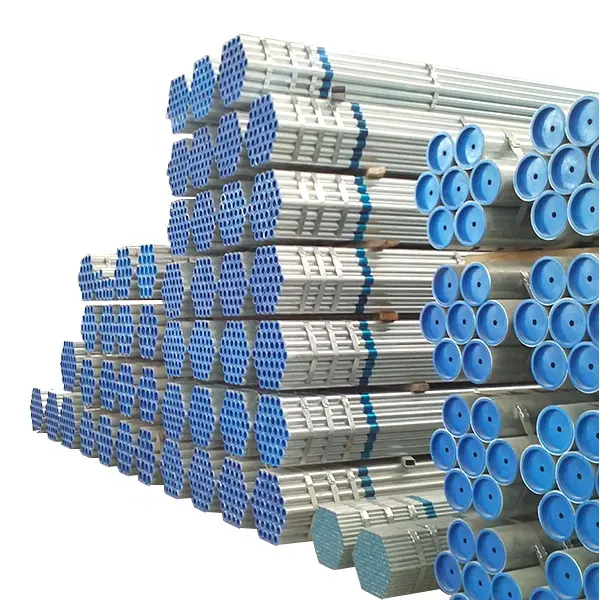
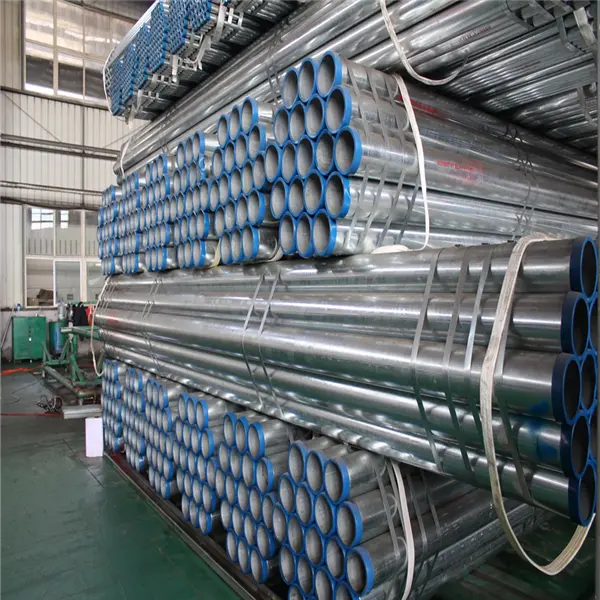
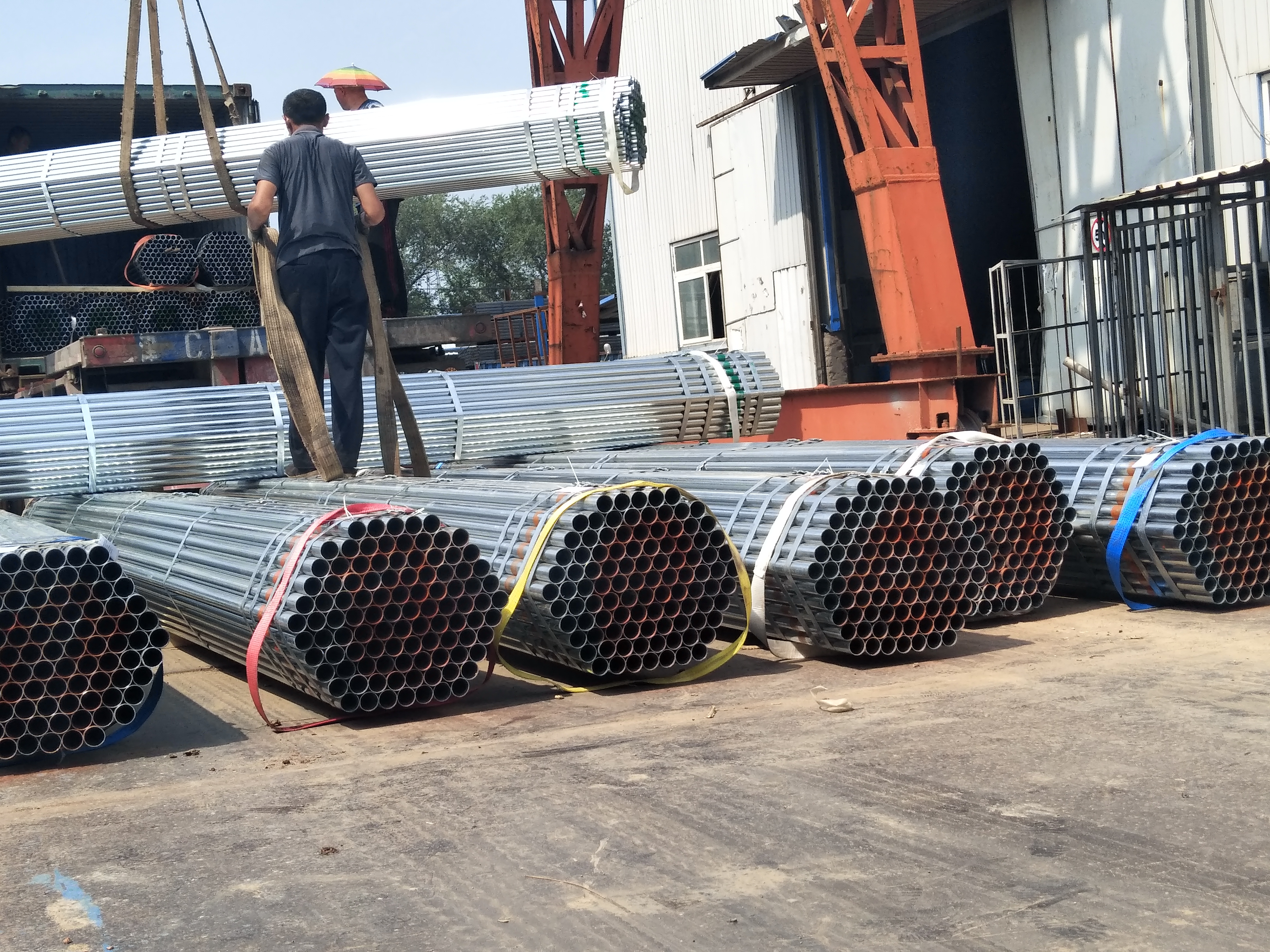
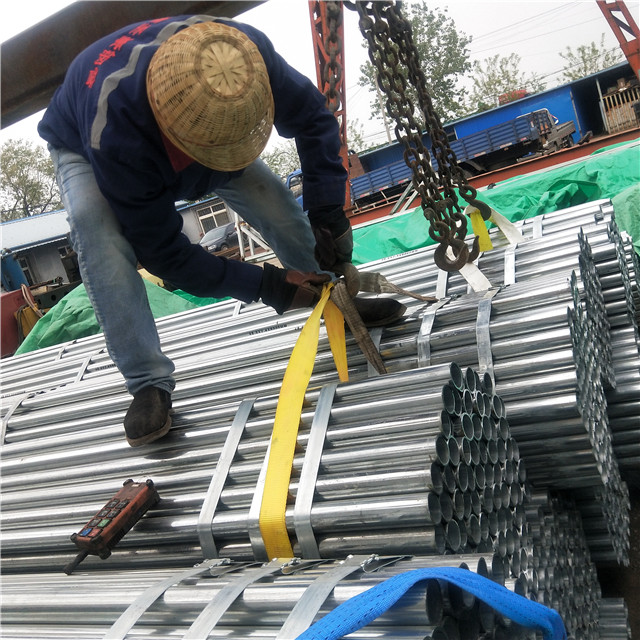
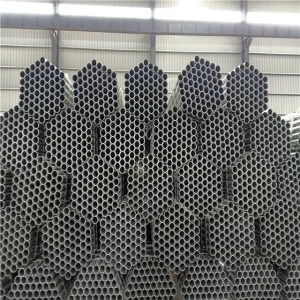
Pipes are packaged in hexagonal bundles secured with steel strapping. Threaded ends are protected with plastic caps, and the bundles can be wrapped in waterproof woven sheets to prevent exposure to moisture and sea salt during ocean transit.
For standard sizes and specifications, production and delivery to the port generally takes 20 to 30 days from order confirmation. Custom requests, such as non-standard wall thicknesses or specific end configurations, may require 35 to 45 days depending on the current production schedule.
Q235B is a standard carbon steel grade comparable to ASTM A36, commonly used for low-pressure piping, scaffolding, and light structural frames. Q345B is a low-alloy, high-strength steel comparable to ASTM A572, selected for heavy-duty structural columns, large-span trusses, and high-load mechanical components.
Building long-term relationships through transparent operations and direct face-to-face communication.
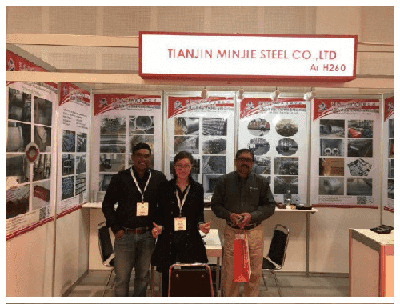
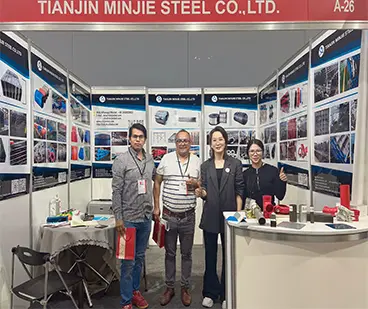
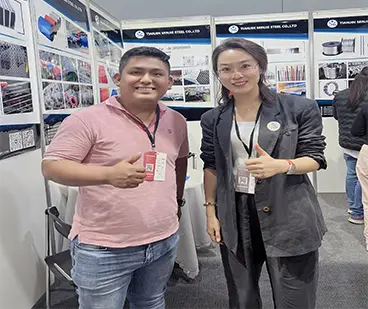
Tianjin Minjie participates in the Canton Fair annually, presenting our updated product lines to international buyers. Our team provides technical consultations directly at the event, explaining our manufacturing standards and quality control protocols.
Approximately 80% of the clients we meet at the fair schedule visits to our Tianjin factory to review our equipment, check inventory levels, and discuss logistics arrangements. We focus on transparent operations to help clients make informed procurement decisions.
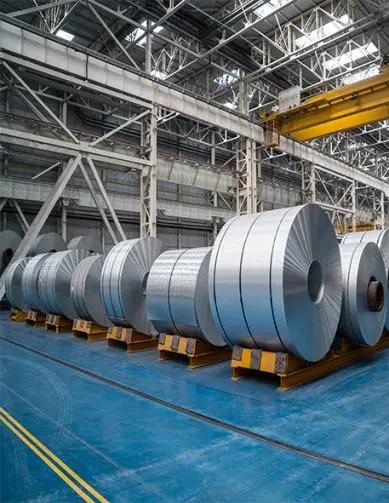
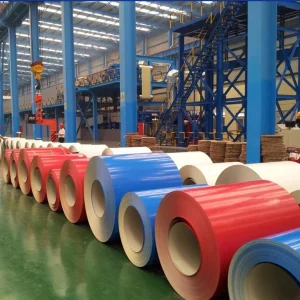
Hot-dipped galvanized, pre-painted (PPGI/PPGL), and color-coated steel coils.
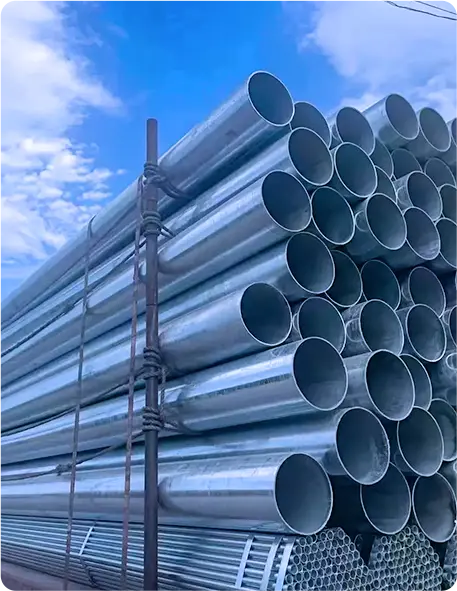
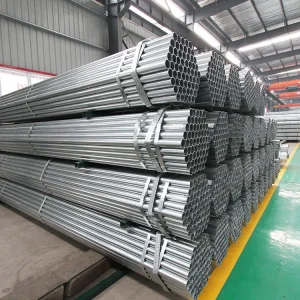
Hot-dip galvanized, pre-galvanized, and zinc-aluminum-magnesium alloy pipes.
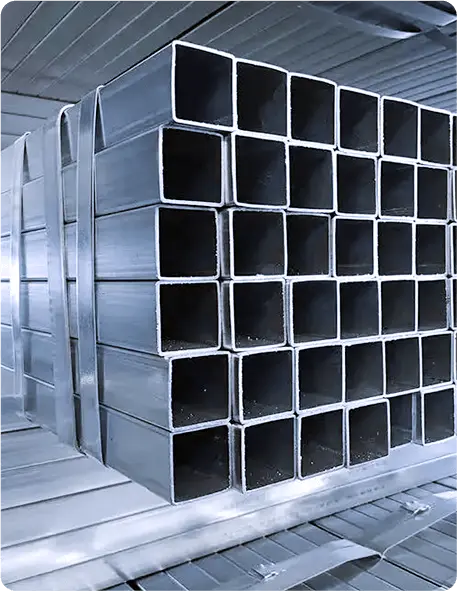
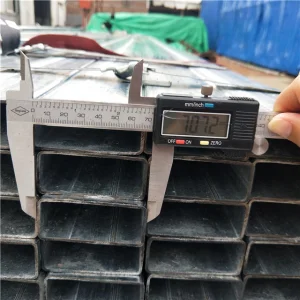
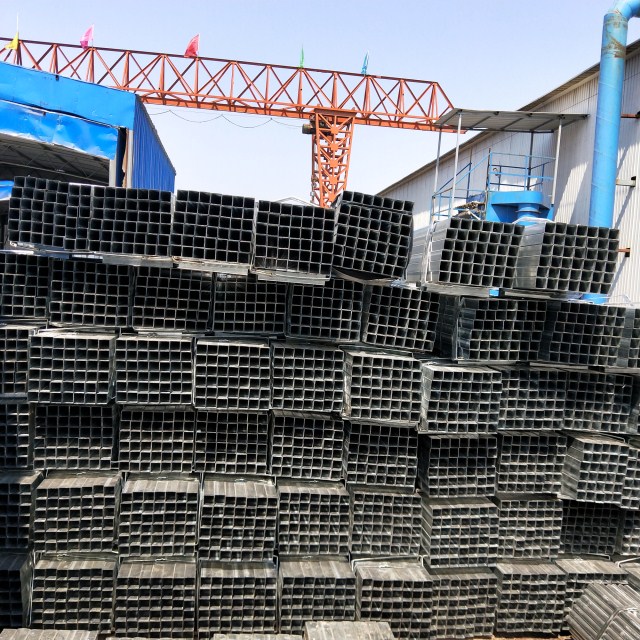
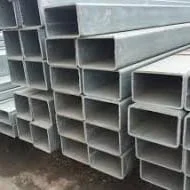
Welded structural hollow sections in square and rectangular profiles.
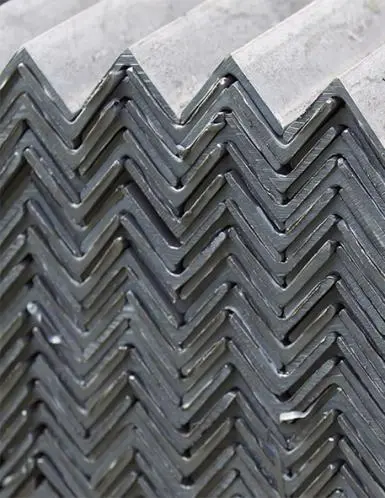
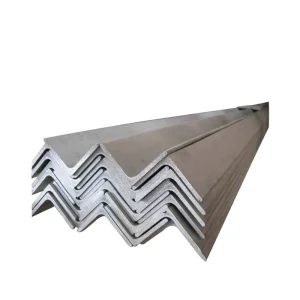
Hot-rolled equal and unequal structural steel angles.
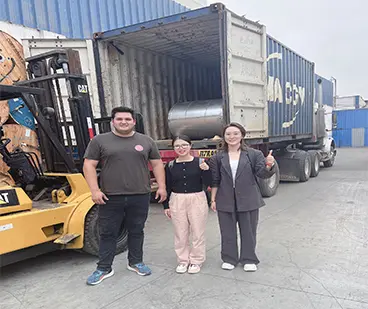
Recent shipments and client projects utilizing our galvanized structural and mechanical pipes.

Complete structural and fluid distribution components available for international shipment. Select a product to review certifications.
 Minjie Steel