Engineered to withstand extreme environmental parameters and deliver robust corrosion-resistant performance.
In the current era of modern structural architecture, high-load transport infrastructure, and industrial production systems, anti-corrosive reliability is not merely a preference; it is a structural mandate. As leading China Galvanized Steel Manufacturers & Suppliers, we recognize that our products serve as the backbone of projects operating under severe chemical, marine, and mechanical stress. The global market landscape is demanding materials with longer lifecycles, minimal maintenance intervals, and lower carbon footprints during raw material processing.
Tianjin Minjie Steel Co., Ltd, established in 1998, has consistently responded to this transition by integrating advanced metallurgical sciences with high-volume, automated production. By placing our 70,000 square meter factory in close geographical alignment with XinGang Port (only 40 kilometers distance), we minimize logistics latency and carbon footprint, giving our worldwide industrial clients a clear cost-to-performance and lead-time advantage.
The worldwide consumption of galvanized steel is undergoing an transformation. Driven by the expansion of solar energy installations, high-voltage transmission grids, and heavy-duty structural frames in developing economic zones, the demand has shifted from standard carbon products to highly specialized zinc-coated alloys. Regions like Southeast Asia, Latin America, and the Middle East are investing heavily in logistics ports and urban transport pipelines. These projects demand specialized steel grades capable of resisting corrosion from saline air, extreme heat, and soil moisture.
Furthermore, Western markets (including Australia and the European Union) are imposing rigorous lifecycle tracking and product testing certifications. Our processing routes satisfy ASTM, DIN, JIS, and GB standards, verifying that every square meter of steel maintains an even zinc distribution. This prevents early oxidation-related issues and maintains structural reliability for up to 50 years, depending on environmental conditions.
"Tianjin Minjie Steel Co., Ltd is dedicated to engineering materials that lower systemic downtime. By offering hot-dip galvanization and pre-galvanization methods, we match specific budget and environmental parameters with absolute precision."
Understanding the core mechanical differences between structural grades is vital for engineering planners. The primary standards for carbon steel, such as Q235B, ASTM A36, and SS400, exhibit distinct properties that dictate their application limits:
Established in 1998, Tianjin Minjie Steel Co., Ltd has expanded from a local processing facility to a globally recognized manufacturer and exporter. Spanning over 70,000 square meters of high-tech manufacturing area, we operate directly from the heart of the northern China industrial sector.
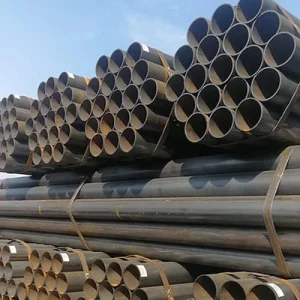
Our factory contains 4 pre-galvanized product lines, 8 ERW steel pipe product lines, and 3 hot-dipped galvanized process lines. This multi-line structure allows us to handle different client orders concurrently, delivering both standardized large-volume batches and specialized product requests without compromising delivery timelines. All our products are manufactured under the ISO9001 quality certification framework, ensuring that each structural batch can withstand rigorous inspections.
In addition to standard structural components, Minjie Steel owns three distinct patented solutions: Groove Pipe, Shoulder Pipe, and Victaulic Pipe. These patented connections drastically reduce onsite installation times and lower pipeline leakage risk in fluid transportation setups.
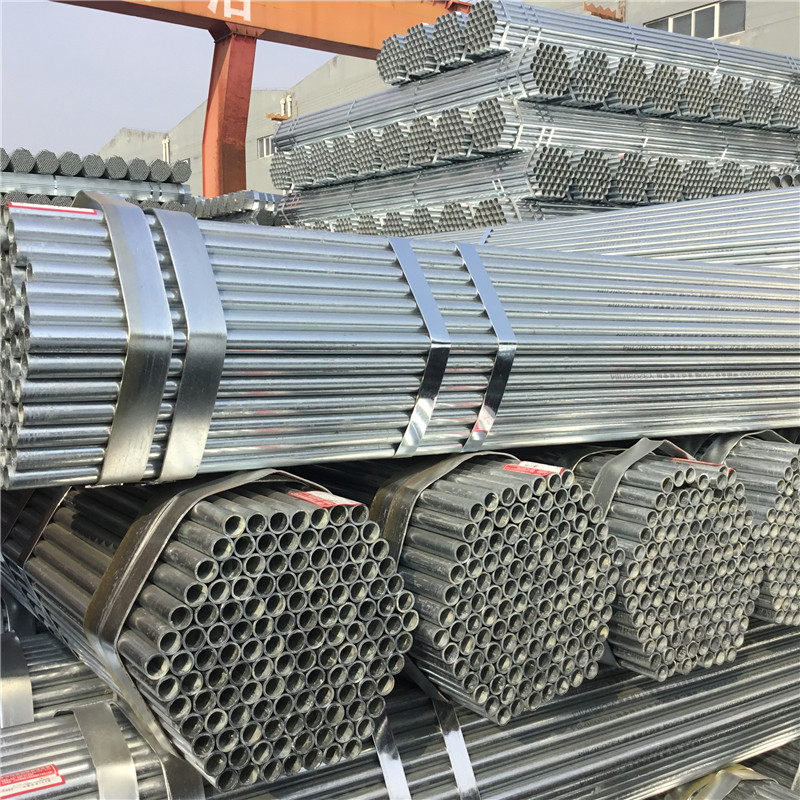
We use hot-dip galvanization techniques that result in cohesive zinc-iron alloy layers. This dual protection layer prevents electrochemical corrosion in demanding coastal and heavy industrial settings.
Our custom Groove, Shoulder, and Victaulic connections eliminate the need for traditional field welding. This reduces installation costs and maintains pipe protection at all structural joints.
Exporting to Singapore, South Korea, Australia, India, and Saudi Arabia. Our logistics teams coordinate directly with XinGang Port to ensure streamlined border clearance and shipping.
Steel products must perform reliably under diverse real-world conditions. A single steel standard cannot serve every industrial scenario. Because of this, Tianjin Minjie Steel designs specific product configurations optimized for regional environments and applications:
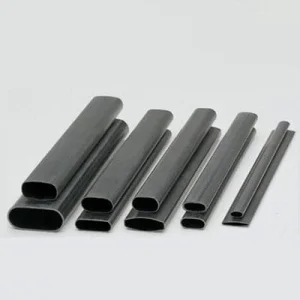
Agricultural structures require materials that resist high humidity, pesticide exposure, and continuous condensation. Our pre-galvanized and hot-dipped elliptical tubes are engineered to prevent moisture buildup while providing the structural strength needed to support automated crop systems.
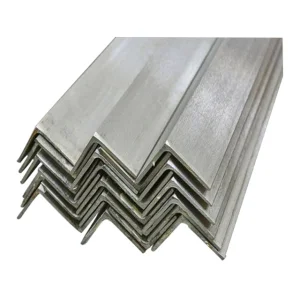
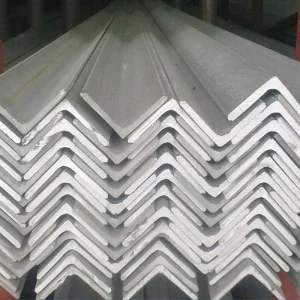
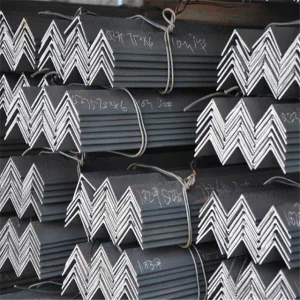
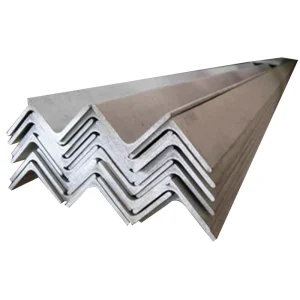
Exposed to wind loads and atmospheric moisture, power utility structures demand high structural strength. Minjie Q235B galvanized angle steel is coated with heavy zinc layers to prevent corrosion, keeping utility grids operational and maintenance-free for decades.
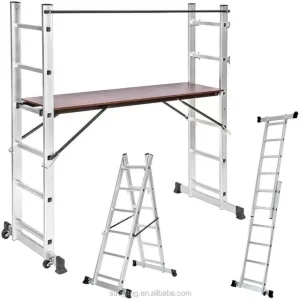
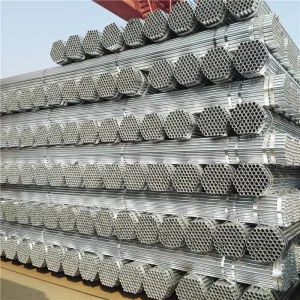
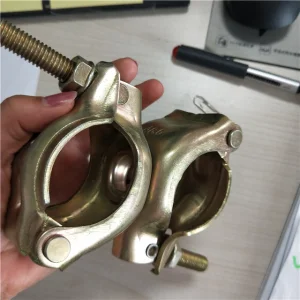
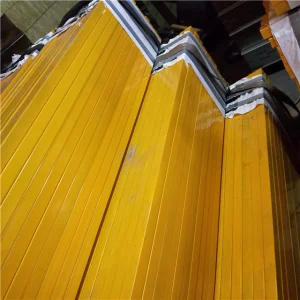
Urban building projects require materials that support safety, durability, and fast setup. Our scaffolding tubes, walk boards, and steel couplers comply with EN 10219 and BS 1139 standards, offering the structural integrity and wear resistance needed for high-rise work platforms.
Our international business is built on verified, field-tested quality. In 2019, our delegation traveled to Singapore to inspect our offshore scaffolding and structural tubing products, which received positive feedback from marine infrastructure engineers. During the same year, a South Korean industrial design firm visited our facility, establishing a long-term supply agreement for specialized cold-formed galvanized profiles.
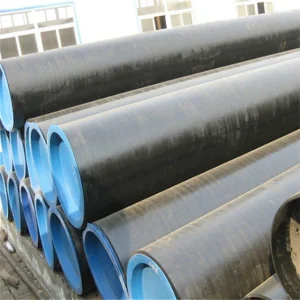
In Australia, our galvanized structural angle profiles have been used for agricultural frames and coastal infrastructure installations for over five years. In Saudi Arabia and Lebanon, clients have contracted with us for thousands of tons of heavy-duty black carbon and galvanized pipes for large-scale municipal water transport and oil and gas networks.
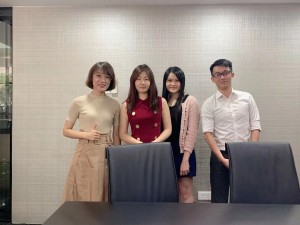
On-site structural evaluation and feedback collection from marine engineering partners.
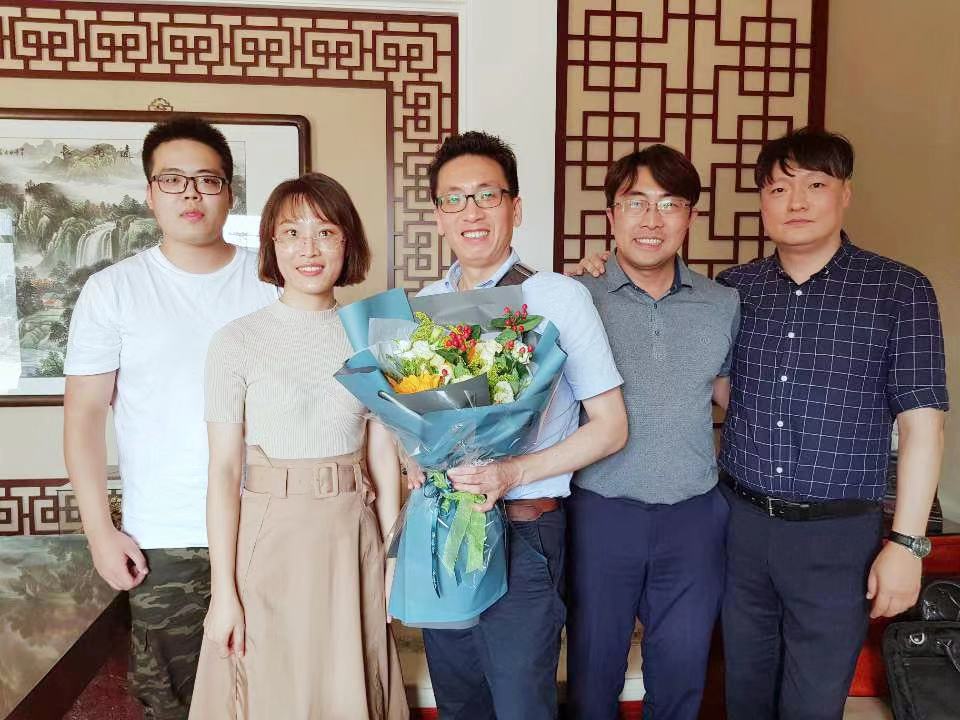
Collaborative structural design and custom sizing agreement negotiations.
Annual structural steel quality inspection and loading clearance reviews.
High-volume pipeline contracts for regional oil, gas, and water distribution networks.
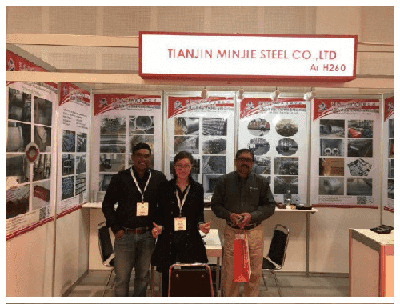
Showcasing our patented groove, shoulder, and victaulic coupling technologies yearly.
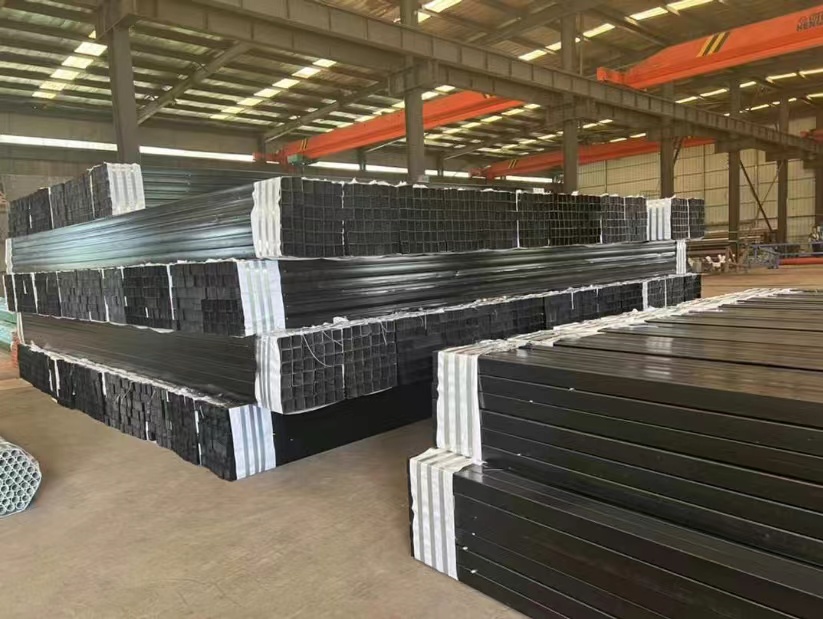
High-capacity cold-rolling and galvanizing lines operating under ISO 9001.
The global steel sector is undergoing a major technological transition. As environmental regulations tighten and structural requirements become more demanding, traditional galvanizing methods are being upgraded with smarter, more efficient processes. Tianjin Minjie Steel is actively investing in the following research and development areas:
Our technical roadmap prioritizes the transition toward Zinc-Aluminum-Magnesium (ZAM) coatings. ZAM coatings provide up to three times the corrosion protection of standard hot-dip galvanizing under identical coating thicknesses. This makes it ideal for solar bracket assemblies and coastal structures. ZAM technology also offers excellent self-healing edge protection, which prevents rust on sheared metal edges and punched holes.
Complying with global environmental regulations (such as RoHS and REACH), our production processes utilize advanced trivalent chromium passivation. This shift removes toxic hexavalent chromium from the waste stream while maintaining excellent protection against white rust during ocean transit and storage.
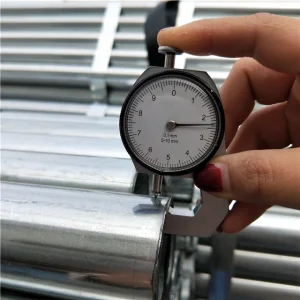
To ensure structural integrity under dynamic loads, we integrate real-time electromagnetic and ultrasonic testing equipment into our 8 ERW production lines. This automated quality control detects minor weld defects immediately, ensuring that every batch of scaffolding tubes and structural pipes is fully verified before leaving our plant.
Expert answers to common engineering questions, structural specifications, and international procurement standards.
Standard-compliant piping systems, heavy construction scaffolding, and precision-engineered connection hardware.
 Minjie Steel